
10 Ways Shame Sabotages HSPs
Is it shame?
That question deserves more room than we tend to give it. Shame is one of the biggest players in the lives of highly sensitive people, and so many of us carry it for decades without once calling it by name. Y'all, that is the sneaky part. If you have lived with anxiety, hypervigilance, survival mode, and a low hum of malaise that outlasts every bit of healing work you have done, shame might be sitting underneath all of it, quiet and uninvited, blocking the peace you keep reaching for.
You journaled. You breathed. You still feel that grime on everything. Let's look at why.
Shame Rarely Walks In and Introduces Itself
Fear feels like fear. Anger feels like anger. Sadness feels sad, and you can usually point right at it. Shame does not work that way. Shame puts on a disguise and lets you blame the disguise instead, which is exactly why naming shame matters so much for highly sensitive people.
The Disguises Shame Wears for Highly Sensitive People
Picture a house with one dirty window. You do not know the window is dirty, so you assume the whole world out there is gray and grimy. Everyone looks like a threat. Nothing you do seems right. The deeper truth is that you are peering through a shame-covered pane, and shame keeps insisting the smudge is the world.
Now picture a backpack. Someone slipped rocks into it when you were small, and you have hauled it so long that bone-tired feels normal to you. You stopped noticing the weight years ago. You only notice that you are exhausted. So many highly sensitive people cannot recall a single day without that backpack, which is why the load reads as ordinary instead of cruel.
Shame wears other disguises too:
A smoke alarm that shrieks over lightly browned toast. Your nervous system treats a typo, an unreturned text, or one awkward beat at a party like a five-alarm fire, when objectively the kitchen is just a little warm.
A fun house mirror that stretches your reflection, so a small mistake becomes "I am a complete failure" and a single disagreement becomes "nobody likes me."
A bad translator living in your skull. Someone says "no thank you, I'll pass," and the translator swears that person secretly cannot stand you.
Every one of these disguises points the finger back inward. That is the signature move of shame.
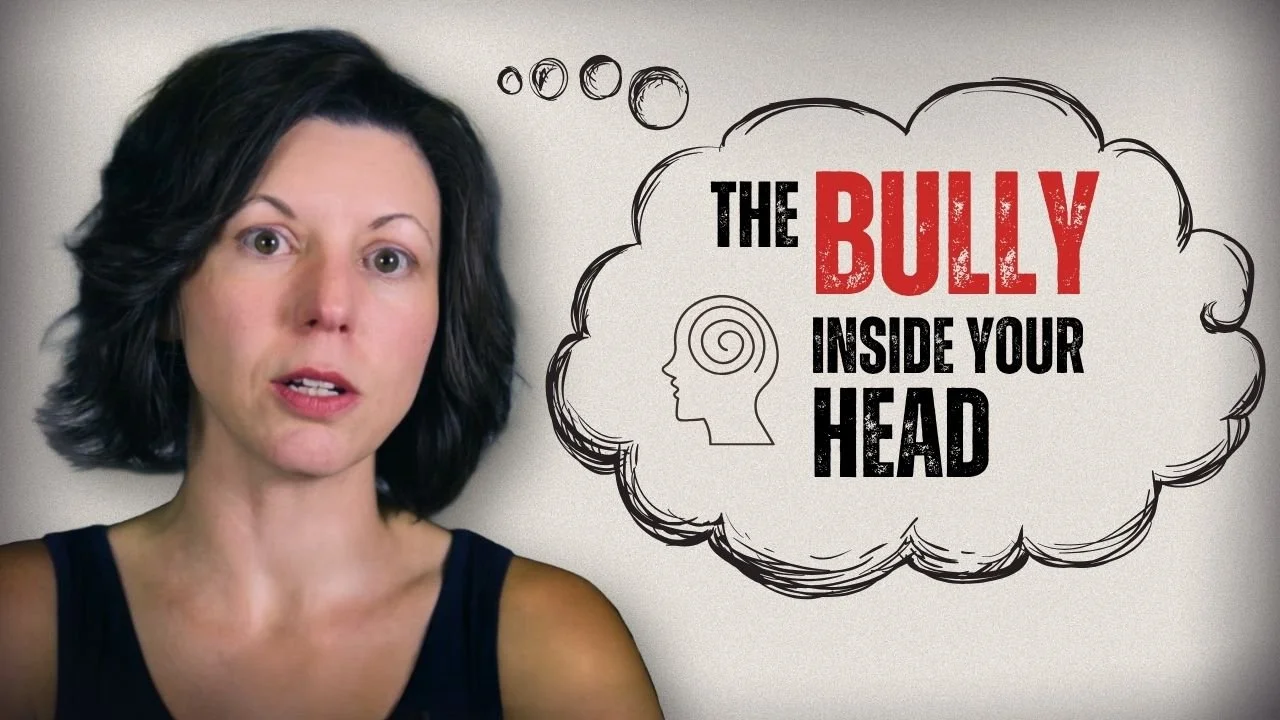
The Bully Who Became Your Critical Voice
Sit with this one the longest, because it runs deeper than the rest.
Imagine a bully followed you home from school when you were young and moved right into your house. At first you noticed that bully. The voice was loud and clearly not yours. Over enough years, the noticing faded, and you began mistaking that bully's voice for your own thinking. The critical voice took up residence and stopped knocking before it walked in.
Listen to how that critical voice talks. "You should know better." "What is wrong with you?" "Everyone else can handle this." "You are so stupid." "You had better watch for everything that could possibly go wrong, because everything can go wrong for you at any second."
So many of us hear that last line and call it being realistic. We tell ourselves that bracing for the worst case is good looking-out, a smart strategy, responsible even. What runs underneath is an old shaming voice on repeat, a bullying voice that crept in long ago and got promoted to narrator. We lose the ability to tell that bully apart from a voice of real wisdom, so we listen hard, and oh, do we let it affect us.
Here is where shame gets especially slippery for highly sensitive people. We are exceptionally good at noticing. The room, the mood, the micro-shift in a face, the charge in the air. That noticing is a gift. Shame hijacks the gift and aims it straight back at us, training us to become world-class at cataloging what is wrong with ourselves.
We hold a lot of integrity around personal responsibility as a tribe. Not every one of us, but a big portion. When that responsibility tangles up with shame, we take our sharpest skill, our observation, and use it to strength-train the habit of seeing only our flaws. We quit practicing the other half, the noticing of what is good and right and worthy in us. Do that for enough years and mindfulness curdles into monitoring. Self-observation hardens into hypervigilance, a gripping, constant scan for the next problem.
Then we hand that hypervigilance a respectable name. We call it self-awareness and feel almost proud. Real self-awareness does not wear you out like that. Real self-awareness simply says, here is what is happening, this is the truth of the moment, and it observes without dumping more weight on your back to carry. Shame judges. Self-awareness witnesses. The exhaustion is your tell. If your awareness leaves your nervous system frayed and your shoulders climbing toward your ears, that is hypervigilance wearing a borrowed badge, and the critical voice is still the one doing the talking.
Why Shame Keeps Your Bucket From Filling
Picture filling a bucket with holes punched along the bottom and the sides. Pour in praise, love, reassurance, achievement, all of it. The water keeps draining out. You go hunting for a baseline of feeling worthy, of being healed-enough, and it never quite arrives.
Nothing is wrong with the water. Nothing is wrong with whatever is pouring it in. Shame is the holes, and the holes are why fullness feels impossible no matter how good the day looked.
Shame Is the Label That Says Broken
Imagine a perfectly good glass jar with a label slapped across it reading "broken." You see the jar and assume the worst. The jar is completely fine. So many sensitive people spend decades repairing what was never cracked, all because shame stuck a false label on early and we kept accepting it as fact.
Shame Is the Swampy Foundation Under Your Nervous System
Picture a house built on soggy, swampy ground. The doors stick. The windows crack. The floors tilt, the frames sag and warp on you. Being a good steward, you keep fixing doors, releveling floors, patching windows, and nothing holds, because the doors were never the real problem.
Highly sensitive people do this constantly. We try to fix the people pleasing. We try to fix the perfectionism. We try to fix the overthinking and the anxiety and the whole struggle we file under boundary work. Those are the crooked doors and the cracked windows. Real, worth honest care and elbow grease, no argument. Shame is the swamp under the whole structure, soaking the foundation, keeping your nervous system on alarm because the ground itself never feels solid enough for peace to settle.
What Self-Awareness and Peace Actually Feel Like
Real self-awareness lands soft. It tells the truth and lets you breathe, lets a little peace move back in. It does not leave your nervous system buzzing with hypervigilance or your critical voice gloating in the corner.
Naming shame is how you start washing the window, setting down the backpack, peeling off the false label, questioning the bully you mistook for your own mind. There is so much healing available once you quit polishing doors and finally look at the swamp. So much peace and joy waiting for you on the other side of shame.
Light and love, y'all.
Episode Tags
- ADD 1
- Abuse 17
- Alcohol 3
- Anger 11
- Archetypes 1
- Bullying 6
- Childhood 38
- Codependency 11
- Covid 4
- Crystal Catalina 4
- Depression 15
- Detachment 2
- Disassociation 4
- Discomfort 1
- Emotions 75
- Existentialism 2
- Faith 1
- Family 28
- Fatigue 4
- Focus 3
- Gratitude 12
- Grief 14
- Guilt 2
- Healers 7
- Healing 52
- High Sensation 4
- Hope 1
- Hypervigilance 7
- Introverts 6
- Lonliness 10
- Love 3
- Manifesting 5
- Manipulation 20
- Masculinity 1
- Men 1
- Mindfulness 39
- Money 10
- Music 3
- Nutrition 2
- Overthinking 8
- PTSD 13
- Parenting 12
- People Pleasing 10
- Perfectionism 8
- Pets 4
- Relationships 23
- Resiliency 14
- Sadness 1
- Self Esteem 19
- Self Love 11










Episode Tags
- ADD 1
- Abuse 17
- Alcohol 3
- Anger 11
- Archetypes 1
- Bullying 6
- Childhood 38
- Codependency 11
- Covid 4
- Crystal Catalina 4
- Depression 15
- Detachment 2
- Disassociation 4
- Discomfort 1
- Emotions 75
- Existentialism 2
- Faith 1
- Family 28
- Fatigue 4
- Focus 3
- Gratitude 12
- Grief 14
- Guilt 2
- Healers 7
- Healing 52
- High Sensation 4
- Hope 1
- Hypervigilance 7
- Introverts 6
- Lonliness 10
- Love 3
- Manifesting 5
- Manipulation 20
- Masculinity 1
- Men 1
- Mindfulness 39
- Money 10
- Music 3
- Nutrition 2
- Overthinking 8
- PTSD 13
- Parenting 12
- People Pleasing 10
- Perfectionism 8
- Pets 4
- Relationships 23
- Resiliency 14
- Sadness 1
- Self Esteem 19
- Self Love 11
Recent Episodes:

Upcoming Events


For the Highly Sensitive Person who wants meditation without distraction. No intros, no explanations, no outros. Just you, Nikki, and meditation. This pack includes 6 separate tracks and over and hour of audio meditations in HD quality. Using mindfulness, we focus the mind and train your attention and awareness, to achieve a mentally clear and emotionally calm and stable state. Meditation may help reduce stress, anxiety, depression, and pain, and enhance peace, perception, self-concept, well-being, and improve our overall mental-health.
*All files are 320k/MP3 format.
Coping Strategy for Stress and Flow (11:52)
Overcoming Bullying Meditation & Mantra (13:10)
Forest Meditation - An immersive nature experience (22:13)
Cultivating Safe Space Within (19:21)
The Space Between Meditation (10:16)
Binaural Beats Brain Wave Trance Experience (14:02)
*Bonus - Binaural Beats Brain Wave Trance Experience - Instrumental Version (14:02)