
How to Articulate Your Thoughts & Communicate More Effectively
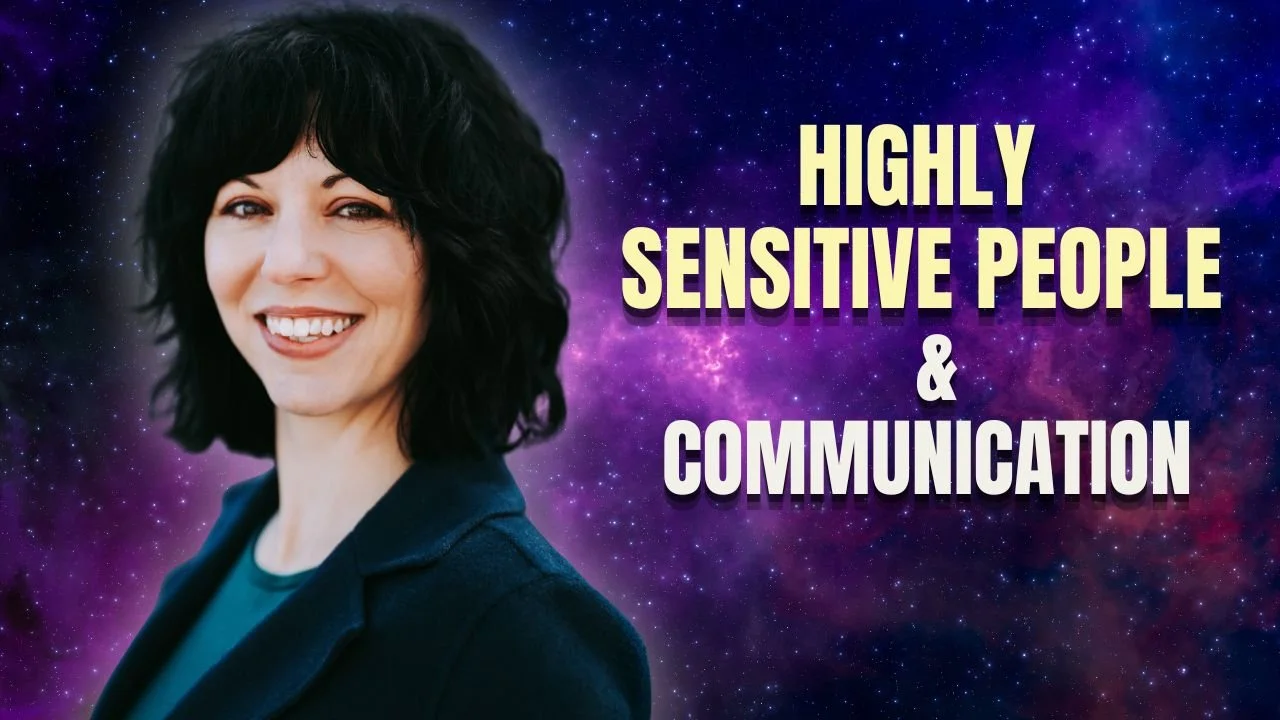
What is your dominant communication style, and why is that your dominant style? Most adults move through the world without ever pausing to answer that question with any honesty. Communication is an art form, and like any art form, it requires awareness, skill, practice, and timing. For Highly Sensitive People, learning to read both internal and external rooms is the foundation of self-awareness, emotional resilience, and the ability to walk away from interactions without feeling drained.
Your Communication Style Reflects Your Conditioning
Your communication style is conditioning. It traces back to what you saw, what you heard, what you learned, what you repeated, and what you may have never known to question. Personality and temperament play a part, and the larger force shaping how you communicate is the environment that trained you.
For HSPs and Highly Sensitive People, this changes everything. Many sensitives carry the assumption that their communication style is locked in by temperament. That assumption keeps growth permanently out of reach and quietly limits how much emotional resilience you can build over a lifetime.
Why Highly Sensitive People Get Stuck in One Style
Most Highly Sensitive People develop one dominant mode of communication early in life. That mode protected something real. The work of building genuine self-awareness starts with honoring what your communication style accomplished for you, then asking with clear eyes where it stops serving you now.
The Hidden Conditioning Behind Your Default Communication Style
This is where the deepest work lives for any Highly Sensitive Person who wants to grow real assertive communication skills. Passive, assertive, aggressive, and passive-aggressive are different tools, not fixed personality traits. There is no rule book for communication, and no single style fits every situation a sensitive will encounter.
Picture walking down a city street and crossing paths with someone agitated, unpredictable, possibly under the influence of something. Practicing assertive communication in that moment would be ridiculous. The wise move is passive, so passive that you become energetically invisible. If that fails, you shift. You might become verbally assertive. You might even become aggressive if the moment truly calls for it, verbally or physically or both. That kind of shift is adaptation, moment to moment to moment, and it builds emotional resilience over time.
The painful part is how many adults move through life without that flexibility, loyal to a fixed identity. Saying things like "I am an introvert, that is not how I would do it." Introverts have to have very extroverted moments on this planet to find any success in life. Sensitives cannot just be one way. Adaptation is what every moment of every day requires, whether you fight it or not, and the refusal to adapt costs Highly Sensitive People years of unnecessary struggle.
For Highly Sensitive People raised in dysfunctional homes, the conditioning often went one direction only. Some HSPs were trained into extreme passivity with the people closest to them. That passivity worked for the dysfunction in those families. It did not work for the child whose body needed to know how to stand up. The freeze response that follows so many survivors into adulthood traces back to exactly this conditioning, where assertive communication was never modeled and never permitted, and where self-awareness was actively discouraged.
Self-awareness is the entry point out. Becoming a student of your own communication style means asking how you learned it, how you earned it, and how you practiced it whether intentionally or accidentally. A baby is not born into the world with all of this. Something developed it. Something taught it. Anything that was taught can be examined, questioned, and rewritten with more self-awareness and stronger emotional resilience.
Become an Emotional Scientist
Take a recent interaction that went sideways, something that left you feeling icky, misunderstood, or unsettled. That memory is your laboratory.
Replay the Scene Frame by Frame
Replay that moment like a scientist instead of a victim or a shame-giver. Observer mode. Watch yourself the way you would review a gas station video, frame by frame. Body language. Tone. Timing. The energy in you, the energy in the other person.
Look especially at the split seconds before you responded the way you typically do. Your real patterns live there, inside the micro-decisions that feel mindless and automatic. Those patterns feel automated, and you are still the one running the program. You are the automator. Slowing this work down builds the kind of self-awareness that changes outcomes.
Defending Old Wounds Blocks Assertive Communication
When a conversation goes sideways, most adults feel an urge to defend. Defending their position. Defending their logic. Defending their personhood. The more useful question is what actually gets defended in those moments. Old wounds, more often than not. Communication that pours out of an unhealed wound stays stuck inside the wound. Assertive communication coming from a healed place builds something entirely different and grows real emotional resilience over time.
Why Changing Your Communication Style Feels So Vulnerable
Why does it feel so damn vulnerable to respond differently than you normally would, especially with people who already know your patterns? Most Highly Sensitive People miss the quiet answer underneath this question. You have trained everyone around you to expect a certain version of you. When you change, even by a few simple words, the entire system you built with those people shifts.
Your nervous system reads that shift as danger and rushes to pull you back into the familiar pattern, even when the change is genuinely healthy. Some discomfort signals stop now. Other discomfort signals keep going. Learning to tell the difference is part of the art form, and part of the emotional resilience that grows slowly over years.
Naming the Fear Underneath Your Communication Style
Ask yourself what you are afraid will happen if you communicate differently. Fear of anger. Fear of being left. Fear of judgment. Fear of exposure. Fear of being made fun of. An unnamed fear runs the subconscious show. Naming it brings what is subconscious to the conscious mind, where you can finally work with it and loosen its grip.
Build a Bigger Toolbox of Communication Style Options
What you need is a bigger toolbox. Range. Choices. The ability to pick passive when safety requires it. Assertive communication when clarity and respect are on the line. Aggressive in the rare moments life truly demands it.
For Highly Sensitive People committed to growth, every conversation becomes a training ground. Self-awareness deepens with each interaction. Emotional resilience builds quietly underneath. Your communication style stops being a fixed identity and starts becoming a living art form, adapting to each moment with more grace and more truth.
Episode Tags
- ADD 1
- Abuse 17
- Alcohol 3
- Anger 11
- Archetypes 1
- Bullying 6
- Childhood 38
- Codependency 11
- Covid 4
- Crystal Catalina 4
- Depression 15
- Detachment 2
- Disassociation 4
- Discomfort 1
- Emotions 75
- Existentialism 2
- Faith 1
- Family 28
- Fatigue 4
- Focus 3
- Gratitude 12
- Grief 14
- Guilt 2
- Healers 7
- Healing 52
- High Sensation 4
- Hope 1
- Hypervigilance 7
- Introverts 6
- Lonliness 10
- Love 3
- Manifesting 5
- Manipulation 20
- Masculinity 1
- Men 1
- Mindfulness 39
- Money 10
- Music 3
- Nutrition 2
- Overthinking 8
- PTSD 13
- Parenting 12
- People Pleasing 10
- Perfectionism 8
- Pets 4
- Relationships 23
- Resiliency 14
- Sadness 1
- Self Esteem 19
- Self Love 11










Episode Tags
- ADD 1
- Abuse 17
- Alcohol 3
- Anger 11
- Archetypes 1
- Bullying 6
- Childhood 38
- Codependency 11
- Covid 4
- Crystal Catalina 4
- Depression 15
- Detachment 2
- Disassociation 4
- Discomfort 1
- Emotions 75
- Existentialism 2
- Faith 1
- Family 28
- Fatigue 4
- Focus 3
- Gratitude 12
- Grief 14
- Guilt 2
- Healers 7
- Healing 52
- High Sensation 4
- Hope 1
- Hypervigilance 7
- Introverts 6
- Lonliness 10
- Love 3
- Manifesting 5
- Manipulation 20
- Masculinity 1
- Men 1
- Mindfulness 39
- Money 10
- Music 3
- Nutrition 2
- Overthinking 8
- PTSD 13
- Parenting 12
- People Pleasing 10
- Perfectionism 8
- Pets 4
- Relationships 23
- Resiliency 14
- Sadness 1
- Self Esteem 19
- Self Love 11
Recent Episodes:
Upcoming Events


For the Highly Sensitive Person who wants meditation without distraction. No intros, no explanations, no outros. Just you, Nikki, and meditation. This pack includes 6 separate tracks and over and hour of audio meditations in HD quality. Using mindfulness, we focus the mind and train your attention and awareness, to achieve a mentally clear and emotionally calm and stable state. Meditation may help reduce stress, anxiety, depression, and pain, and enhance peace, perception, self-concept, well-being, and improve our overall mental-health.
*All files are 320k/MP3 format.
Coping Strategy for Stress and Flow (11:52)
Overcoming Bullying Meditation & Mantra (13:10)
Forest Meditation - An immersive nature experience (22:13)
Cultivating Safe Space Within (19:21)
The Space Between Meditation (10:16)
Binaural Beats Brain Wave Trance Experience (14:02)
*Bonus - Binaural Beats Brain Wave Trance Experience - Instrumental Version (14:02)