
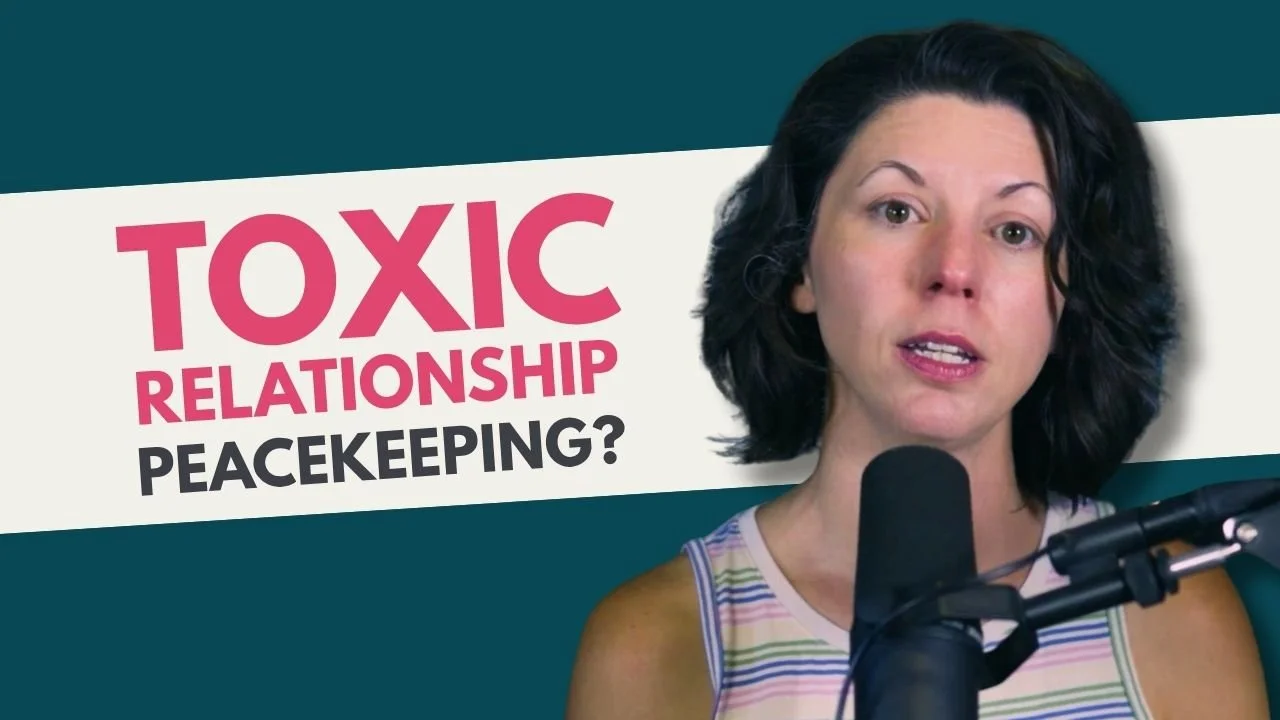
What do toxic relationships do to highly sensitive people?
They rewire the nervous system. They teach you to anticipate someone else's reaction before you even notice your own need. If you are a highly sensitive person who has come out the other side of a toxic relationship, this question probably lives somewhere in your body, not just your head. Boundaries work starts right here, with naming what actually happened to your nervous system, instead of only naming what happened between two people.
How Toxic Relationships Confuse Guilt With Wrongdoing
Guilt is where a lot of this confusion begins.
After a toxic relationship, guilt stops working the way it is supposed to. Guilt is meant to function like healthy feedback, a signal that helps you repair a real wrong and stay connected to people you care about. Instead, guilt starts firing at the smallest thing. A reasonable no. A simple boundary. An honest need. It goes off constantly, the way a fire alarm goes off over a piece of burnt toast with no actual smoke in the room.
Once guilt gets corrupted like this, you cannot trust it as an honest measure of right and wrong anymore. You feel guilty and assume you did something wrong. But the guilt is not assessing wrongdoing accurately. It is running old programming from a toxic relationship that needed you to feel guilty for having needs at all. Recognizing this is the first real step toward nervous system safety. The old programming needs to go OUT, and something steadier needs to come IN.
The Nervous System On High Alert: Hypervigilance and the Automatic Yes
Hypervigilance is one of the clearest signs that your nervous system spent years in a toxic relationship instead of a safe one.
There are two versions running at once, which explains why you feel tired even on a quiet day. External hypervigilance is scanning the room, reading a mood, watching for the worst case before it happens. Internal hypervigilance is quieter and just as exhausting. It is monitoring your own tone. Editing your own face. Choosing silence when a part of you wants to speak up, because some other part of you learned that speaking up was not safe.
Highly sensitive people carry both of these at once, all day, without realizing it is optional.
One pattern shows up so often it deserves its own name: the automatic yes. This is agreeing to a request before you have even finished processing what was actually asked of you. It is not politeness. It is toxic conditioning, a nervous system trained to agree first and ask questions never, because somewhere along the way, disagreeing came with a cost you could not afford.
Internal hypervigilance shows up as:
Monitoring your tone before you speak
Editing your facial expression in real time
Choosing silence over honesty
Avoiding conflict even when a boundary is at stake
Timing every word instead of speaking with any flow
None of this is who you are. It is NOT your personality. It is what a toxic relationship trained your nervous system to do to survive.
Preemptively abandoning yourself like this is not natural. It is not normal. It is a learned response, and learned responses can be unlearned. Your birthright is to be reasonably self protective, to be thoughtful about what you say yes to and what you take on. Your safety was never actually in pleasing people. Your exhaustion was.
This is where reparenting your inner child becomes so important. Your inner child learned, a long time ago, that saying yes and staying quiet meant survival. Your job now is to teach that part of you something different, gently and consistently, until your nervous system believes it too. Boundaries are how you do that teaching. Not as a single conversation, but as a daily practice of showing your inner child that no is allowed, and safe, and survivable.
Losing Clean Anger After Toxic Relationships
Anger changes too, after a toxic relationship. Toxicity teaches you to bury anger, intellectualize anger, think your way around anger instead of feeling it. Clean anger is simple: it is the signal that some part of you knows you deserve better than what is happening. Losing access to it does not make you calmer. It just moves the anger inward, until it goes quiet or erupts.
Boundaries, Compassion, and Where Self Betrayal Begins
Highly sensitive people often lose track of where compassion ends and self betrayal begins. So much energy goes toward understanding a toxic person, hoping enough compassion will finally make the toxicity stop. The hope is that understanding hard enough will bring calm. But no amount of compassion changes another human being who has not chosen to change.
Real compassion runs both directions. It was never meant to be a one way faucet pouring outward while you go empty. Boundaries mark the line between using your empathy for someone else and using it for yourself. You are allowed to turn your own compassion on your own life. That permission alone can undo years of toxic conditioning.
No One Is Coming To Save You
There is no white knight coming to fix a toxic relationship for you. No perfect therapist can make a toxic person stop being toxic. The only rescue available is the one you build yourself, boundary by boundary, inside your own nervous system.
Say this to yourself today. My guilt does not decide my worth. My anger is allowed. My no is safe now. My nervous system is allowed to learn peace.
Light and love, y'all.
Episode Tags
- ADD 1
- Abuse 17
- Alcohol 3
- Anger 11
- Archetypes 1
- Bullying 6
- Childhood 38
- Codependency 11
- Covid 4
- Crystal Catalina 4
- Depression 15
- Detachment 2
- Disassociation 4
- Discomfort 1
- Emotions 75
- Existentialism 2
- Faith 1
- Family 28
- Fatigue 4
- Focus 3
- Gratitude 12
- Grief 14
- Guilt 2
- Healers 7
- Healing 52
- High Sensation 4
- Hope 1
- Hypervigilance 7
- Introverts 6
- Lonliness 10
- Love 3
- Manifesting 5
- Manipulation 20
- Masculinity 1
- Men 1
- Mindfulness 39
- Money 10
- Music 3
- Nutrition 2
- Overthinking 8
- PTSD 13
- Parenting 12
- People Pleasing 10
- Perfectionism 8
- Pets 4
- Relationships 23
- Resiliency 14
- Sadness 1
- Self Esteem 19
- Self Love 11








Episode Tags
- ADD 1
- Abuse 17
- Alcohol 3
- Anger 11
- Archetypes 1
- Bullying 6
- Childhood 38
- Codependency 11
- Covid 4
- Crystal Catalina 4
- Depression 15
- Detachment 2
- Disassociation 4
- Discomfort 1
- Emotions 75
- Existentialism 2
- Faith 1
- Family 28
- Fatigue 4
- Focus 3
- Gratitude 12
- Grief 14
- Guilt 2
- Healers 7
- Healing 52
- High Sensation 4
- Hope 1
- Hypervigilance 7
- Introverts 6
- Lonliness 10
- Love 3
- Manifesting 5
- Manipulation 20
- Masculinity 1
- Men 1
- Mindfulness 39
- Money 10
- Music 3
- Nutrition 2
- Overthinking 8
- PTSD 13
- Parenting 12
- People Pleasing 10
- Perfectionism 8
- Pets 4
- Relationships 23
- Resiliency 14
- Sadness 1
- Self Esteem 19
- Self Love 11
Recent Episodes:


Upcoming Events


For the Highly Sensitive Person who wants meditation without distraction. No intros, no explanations, no outros. Just you, Nikki, and meditation. This pack includes 6 separate tracks and over and hour of audio meditations in HD quality. Using mindfulness, we focus the mind and train your attention and awareness, to achieve a mentally clear and emotionally calm and stable state. Meditation may help reduce stress, anxiety, depression, and pain, and enhance peace, perception, self-concept, well-being, and improve our overall mental-health.
*All files are 320k/MP3 format.
Coping Strategy for Stress and Flow (11:52)
Overcoming Bullying Meditation & Mantra (13:10)
Forest Meditation - An immersive nature experience (22:13)
Cultivating Safe Space Within (19:21)
The Space Between Meditation (10:16)
Binaural Beats Brain Wave Trance Experience (14:02)
*Bonus - Binaural Beats Brain Wave Trance Experience - Instrumental Version (14:02)