
The Lindsay Clancy Case. When Empathy Becomes Bias: Signs Compassion Has Lost Emotional Intelligence
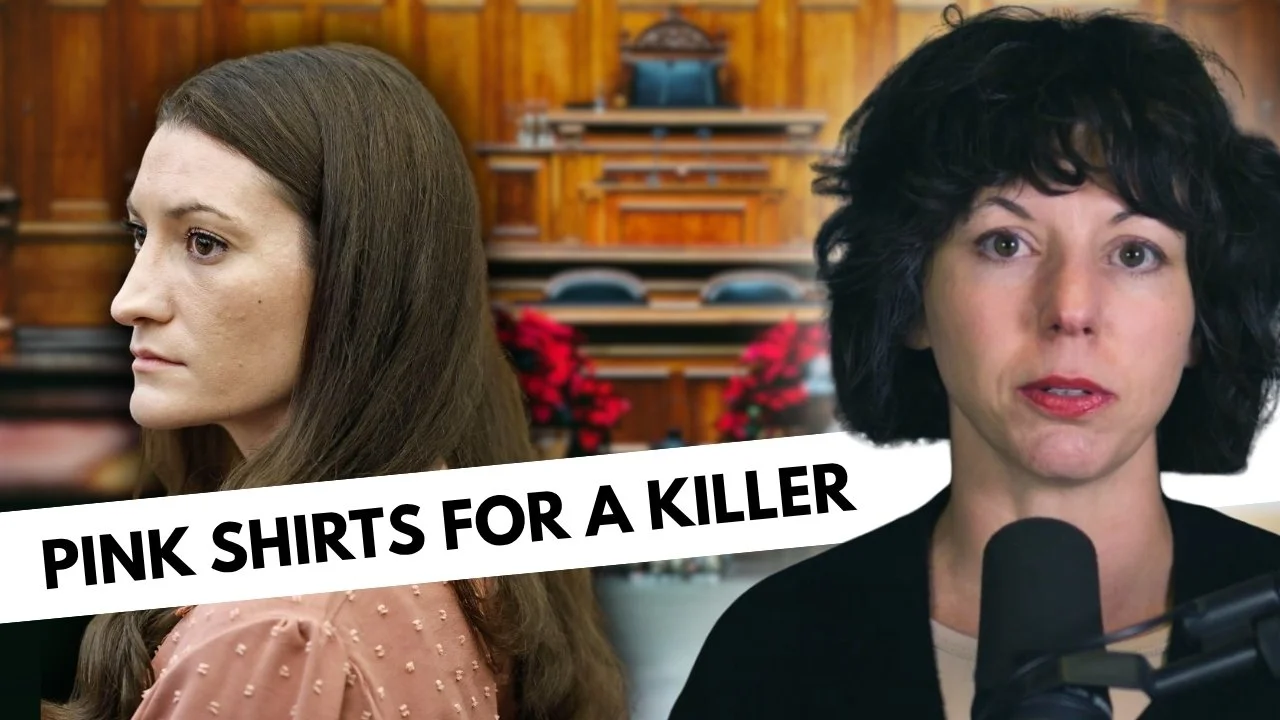
How does our empathy relate to these slippery slopes?
Lindsay Clancy admitted to strangling her three small children. During the trial, groups of women gathered outside the courthouse, some bringing babies along, to show support. One woman stood alone in black, calling the gathering by another name: a funeral for the kids. The jury deadlocked. One holdout refused to agree the killings should be excused by insanity.
This case split people into two furious camps almost overnight. It also reveals something about how empathy actually works, and how easily it can slip into something else entirely.
When Empathy Becomes Bias
Empathy is supposed to widen the lens. Real empathy takes in every person affected by a tragedy, not just the one who feels most familiar. But empathy has a costume it likes to wear. It can look identical to the real thing while quietly working against everyone it claims to protect. Call it identification. Call it projection. Call it plain bias. All of it can walk around wearing empathy's clothes, and highly sensitive people are usually the last to notice, because feeling something intensely gets mistaken for feeling it correctly.
Emotional Intelligence and the Story We Tell Ourselves
Here is the pattern worth naming. Imagining being the mother at the center of a tragedy can become more powerful than imagining being the children who never got to grow up. That does not mean anyone consciously cares less about three dead kids. It means the nervous system latches onto whoever feels familiar first. Exhaustion. Overwhelm. Feeling unheard by doctors. A lot of people recognize those feelings instantly. Far fewer can picture what it means to be five years old, or three, or eight months.
That gap is where emotional intelligence either shows up or checks out. Seeing yourself in one person and losing sight of everyone else in the room is not empathy working correctly. That is emotional tunnel vision, worth naming every time it shows up, especially for anyone whose empathy runs deep to begin with.
Why Discernment Matters More Than Feeling
Empathy without discernment isn't emotional intelligence. It can be identification. It can be projection. It can be plain avoidance dressed up as compassion, wearing empathy's clothes so well that even the person feeling it cannot tell the difference. Discernment is where boundaries live inside empathy itself. Without it, compassion has no edges, no way to tell where one person's pain ends and someone else's responsibility begins.
Consider a simple test. If someone takes money from a company to cover a mortgage and avoid losing a home, does that deserve a different consequence than taking the same amount to gamble it away? Most people want to say the reason matters, and in one sense it does. Motive tells a story about character. But motive has never been the same question as consequence. Knowing why something happened does not automatically decide what should happen next. A reason can be real and devastating and still not settle the matter.
This shows up everywhere in a case built on postpartum psychosis, medication, and a legal system trying to separate what happened inside someone's mind from what happened with someone's hands. Both things can be true at once. Someone can be catastrophically unwell and still be responsible for the outcome. A healthcare system can fail a patient badly, and that patient can still be the one whose hands caused the harm. Holding two true things at the same time, without collapsing into only one, is the actual skill being tested here, and it is a lot harder than picking a side.
Over-empathy struggles with this because discomfort gets mistaken for evidence. Watching anyone face real consequences can feel unbearable to highly sensitive people, especially those wired for deep compassion. But discomfort watching someone face consequences is not proof those consequences are unfair. Codependency thrives on that confusion, insisting suffering enough should cancel out accountability, and codependency will always find a highly sensitive person to convince first. Emotionally mature empathy asks a different question: given everything that happened, what is actually appropriate here? That is a different question entirely from asking whether someone has suffered enough already.
When enough people agree on one answer at once, something else starts to happen. Disagreement stops looking like a different opinion and starts looking like betrayal to the whole group. Standing outside the crowd, even quietly, takes real nerve. Certainty in numbers is not the same thing as being right. More than one person can deserve compassion and advocacy at the same time. Holding that truth, without letting the loudest feeling in the room decide everything, is what discernment actually looks like in practice.
A few questions worth asking before compassion picks a side on its own:
Am I responding to the facts of this situation, or to a feeling this situation stirred up in me
Would I still feel this certain if I did not personally relate to one person involved
Does holding compassion for one person require me to stop seeing everyone else affected
Empathy Does Not Erase This
Cora was five, Dawson was three, and Callen was eight months old. No amount of compassion for anyone else in this story changes that.
Codependency Dressed Up as Compassion
Codependency cannot sit still while someone faces the fallout of a choice that was never anyone else's to fix. It rushes in wearing a cape, ready to rescue, then quietly resents the rescue later. One recovering people pleaser proved this by finally healing it: a drawing arrived in the mail of a superhero cape hung on a hook, with a note that read, I finally hung up my cape. That image says everything codependency actually is, discomfort wearing empathy's clothes, unable to sit still while somebody else's story plays out the way it is going to play out anyway.
Accountability Is Not Cruelty
Watching someone face real consequences can feel unbearable, especially to anyone whose empathy runs high. That discomfort is real. It is still not evidence that accountability is wrong.
There is a version of this that gets even harder to sit with, involving what happens when someone was not fully present in the moment something happened. Imagine functioning through an entire evening on certain medications, cooking dinner, doing the dishes, holding a full conversation, and remembering none of it by morning. That happens, more often than most people realize. The uncomfortable truth on the other side of it is this: whatever gets done in that state still belongs to the person whose hands did it, whether the memory survives or not. Accountability does not require a perfect memory. It requires ownership.
Highly Sensitive People Carry This Differently
Highly sensitive people and empaths take in more of a room than most people realize, and that gift carries a real cost inside a case like this one. A highly sensitive nervous system does not just notice someone else's exhaustion, it absorbs it as though it were personal, which is wiring, not weakness. Wiring without boundaries turns into merging, and merging is exactly where discernment gets lost first. If any part of this case has felt disproportionately consuming, that reaction makes complete sense.
Boundaries Make Room for Real Compassion
Boundaries are not the opposite of empathy. Boundaries are what keep empathy honest. Without boundaries, compassion has no edges, and a feeling with no edges eventually runs everyone over, including the people it never meant to trample. Discernment and boundaries do the same job from two different angles. One decides where attention goes. The other decides where attention stops.
A few lines worth carrying out of a case like this one:
I can feel for someone and still see clearly.
My compassion does not require me to lose my judgment.
More than one person can deserve my compassion and my advocacy at the same time.
Accountability is not the opposite of care.
Real compassion does not need a costume. It does not need a cape, a crowd, or a side to stand on. It just needs enough discernment and enough emotional intelligence to stay honest, even when the feeling in the room is loud enough to make honesty feel unpopular. That is possible for highly sensitive people too, without asking anyone to feel less.
Light and love, y'all.
Episode Tags
- ADD 1
- Abuse 17
- Alcohol 3
- Anger 11
- Archetypes 1
- Bullying 6
- Childhood 38
- Codependency 11
- Covid 4
- Crystal Catalina 4
- Depression 15
- Detachment 2
- Disassociation 4
- Discomfort 1
- Emotions 75
- Existentialism 2
- Faith 1
- Family 28
- Fatigue 4
- Focus 3
- Gratitude 12
- Grief 14
- Guilt 2
- Healers 7
- Healing 52
- High Sensation 4
- Hope 1
- Hypervigilance 7
- Introverts 6
- Lonliness 10
- Love 3
- Manifesting 5
- Manipulation 20
- Masculinity 1
- Men 1
- Mindfulness 39
- Money 10
- Music 3
- Nutrition 2
- Overthinking 8
- PTSD 13
- Parenting 12
- People Pleasing 10
- Perfectionism 8
- Pets 4
- Relationships 23
- Resiliency 14
- Sadness 1
- Self Esteem 19
- Self Love 11









Episode Tags
- ADD 1
- Abuse 17
- Alcohol 3
- Anger 11
- Archetypes 1
- Bullying 6
- Childhood 38
- Codependency 11
- Covid 4
- Crystal Catalina 4
- Depression 15
- Detachment 2
- Disassociation 4
- Discomfort 1
- Emotions 75
- Existentialism 2
- Faith 1
- Family 28
- Fatigue 4
- Focus 3
- Gratitude 12
- Grief 14
- Guilt 2
- Healers 7
- Healing 52
- High Sensation 4
- Hope 1
- Hypervigilance 7
- Introverts 6
- Lonliness 10
- Love 3
- Manifesting 5
- Manipulation 20
- Masculinity 1
- Men 1
- Mindfulness 39
- Money 10
- Music 3
- Nutrition 2
- Overthinking 8
- PTSD 13
- Parenting 12
- People Pleasing 10
- Perfectionism 8
- Pets 4
- Relationships 23
- Resiliency 14
- Sadness 1
- Self Esteem 19
- Self Love 11
Recent Episodes:
Upcoming Events


For the Highly Sensitive Person who wants meditation without distraction. No intros, no explanations, no outros. Just you, Nikki, and meditation. This pack includes 6 separate tracks and over and hour of audio meditations in HD quality. Using mindfulness, we focus the mind and train your attention and awareness, to achieve a mentally clear and emotionally calm and stable state. Meditation may help reduce stress, anxiety, depression, and pain, and enhance peace, perception, self-concept, well-being, and improve our overall mental-health.
*All files are 320k/MP3 format.
Coping Strategy for Stress and Flow (11:52)
Overcoming Bullying Meditation & Mantra (13:10)
Forest Meditation - An immersive nature experience (22:13)
Cultivating Safe Space Within (19:21)
The Space Between Meditation (10:16)
Binaural Beats Brain Wave Trance Experience (14:02)
*Bonus - Binaural Beats Brain Wave Trance Experience - Instrumental Version (14:02)