
Society Has Changed. You're Not Imagining It.
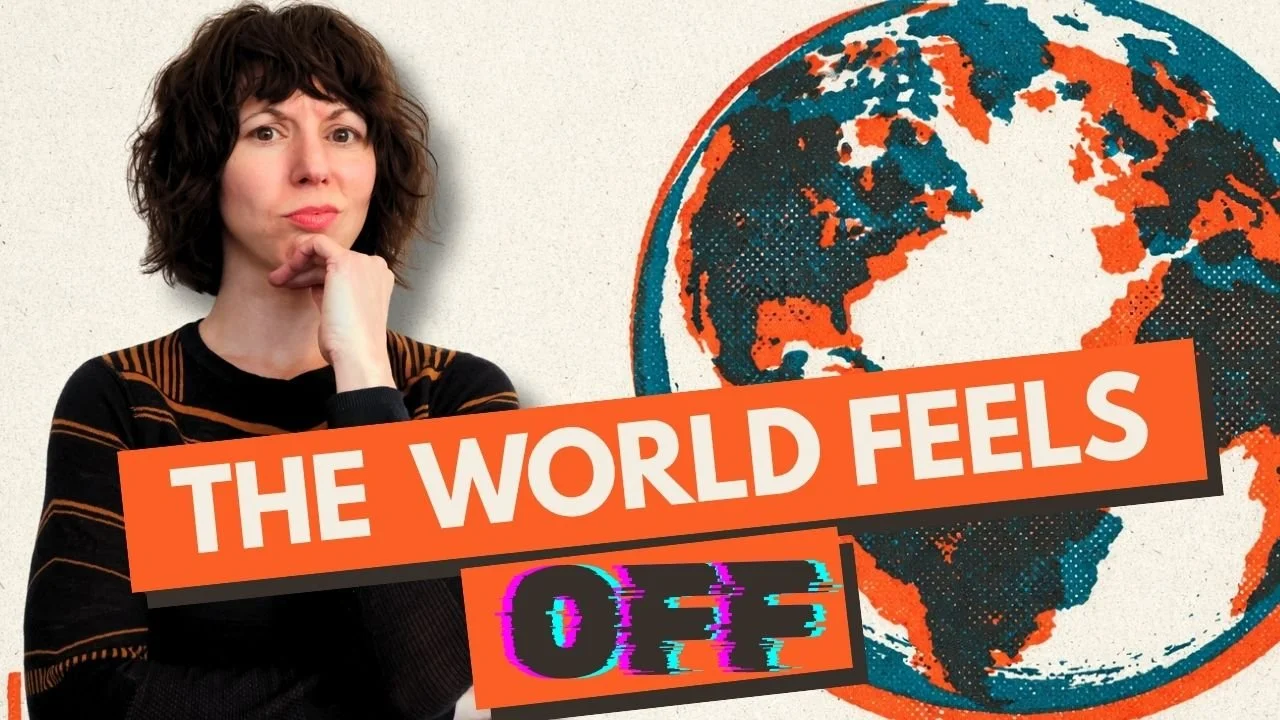
What if your mind and body are running like a computer from 1995, and the modern world keeps downloading software that hardware was never built for?
If you are a highly sensitive person, that question probably lands in your body before your brain finishes processing it. You feel the truth of it in your nervous system. In the fatigue that no amount of sleep quite touches. In the hum of being wired and tired at the same time.
You are not crazy. You are not just getting older or grumpier. You are becoming more conscious inside a culture that is becoming less conscious, less emotionally intelligent, less emotionally mature by the day. The gap between your growing awareness and the world's shrinking conscientiousness is not something you are imagining. That gap is real, and it hurts.
You are allowed to name it. You do not have to gaslight yourself into calling everything progress.
Your Nervous System Is a 1995 Computer Running Modern Software
Imagine a 1995 computer trying to load every modern app, every notification, every demand at once. You would expect that machine to start smoking, short out, fry itself. Your nervous system is doing exactly that. You are being asked to respond quickly, process constantly, adapt endlessly, and keep up with systems that rarely slow down for human limits. The modern world rewards speed and scale, but highly sensitive people are built for depth, reflection, nuance. Ordinary life feels exhausting not because you are weak. Your hardware simply was not built for this pace.
What Highly Sensitive People Are Noticing About Consciousness
Conscientiousness is declining in the population. Care, courtesy, craftsmanship, doing the right thing when nobody is watching. We can see these values fading, and we are not making it up.
At the same time, many highly sensitive people are in a process of awakening. Questioning inherited patterns. Reevaluating relationships with food, consumption, how we speak to ourselves, what products touch our skin, the impact we leave big and small. Awakening leads to real healing, not just talking about trauma but truly moving through it. For a highly sensitive person with a seeker spirit, this creates a strange, painful experience. You are growing more conscious while the culture drifts the other direction. The emotional intelligence required to hold both of those realities at once is extraordinary. You are not imagining the gap. Your nervous system registers every inch of it.
Modern Busyness Is Draining Your Nervous System
Passwords. Portals. Insurance policies. Customer service calls that go nowhere. Comparison shopping with a thousand options when three would do. Software updates that arrive on the computer's schedule, not yours. A dentist's office rescheduling your August appointment to December, then reaching out again to move December too. Job seekers facing multiple rounds of interviews and task boxes just to land one position. Screening for scams in the age of AI when your own voice could be cloned and used against the people you love. Reading every label at the grocery store because the brand you trusted got sold and the formula changed overnight.
We are busier than any generation before us, and so much of that busyness carries no meaning. Highly sensitive people notice this emptiness more acutely because our systems crave beauty, depth, nature, creativity, intimacy, and rest. Not fewer unread emails.
The Emotional Intelligence Highly Sensitive People Need in a Disconnecting World
What was once a healthy individualism has quietly become disconnection, aided by technology. Independence taken too far turns into arrogance. "I don't owe anyone anything. I'm just gonna do me." That flavor of selfishness is exactly what people pleasers fear being accused of, and it is exactly what is spreading through the broader culture. A healthy individualism means taking care of yourself so well that you can better support the people around you. A dysfunctional selfishness means rising above, treating your own needs as the only ones that matter, cutting responsibility to the collective entirely.
Highly sensitive people feel this erosion everywhere. People disappear into phones instead of making eye contact in public. Neighbors become people you never connect with, not even once in four years of living in the same place. Friendships get squeezed between obligations and mindless tasks. Community becomes something we consume rather than something we participate in building. The real question is not "Where do I find community?" but "When is it our turn to be the community builders?"
The loneliness runs deeper than proximity. Over eight billion people share this planet. There is simply less human warmth in ordinary life. Less eye contact. Less chitchat in the line at the store. Block parties where everybody on the street came out to know one another have faded into something we only hear about in stories from the eighties and nineties. Moment to moment, each small absence seems trivial. Day after day, month after month, year after year, your nervous system registers every bit of it.
On top of the disconnection, negativity has become entertainment and identity. Complaining is rewarded with attention, belonging, clicks, money, audience. Outrage spreads faster than nuance or peace. Cynicism can sound smarter than hope. For a highly sensitive person who naturally absorbs emotional tone and undercurrent, living inside a culture marinating in grievance is like breathing secondhand smoke. You do not have to participate in the argument for your nervous system to register that frequency of fight. One person once shared, "I'd been telling myself all my life that I was a realist, and really I've just been negative." That kind of honesty takes courage in a culture that argues to the death that being negative is somehow righteous.
Your awareness has also outgrown your human capacity to act on what you see. Before technology, a person mostly knew what was happening in the family, in the village, maybe the surrounding region. Now, before breakfast, you can know about a murder three states away, a war overseas, an abused animal, political scandals, and four thousand strangers' opinions about all of it. Your circle of awareness has expanded to the stratosphere. Your circle of influence is still mostly local. You cannot affect everything you become aware of. That mismatch produces helplessness and vigilance and guilt all at once.
Guilt is not just there to make you feel terrible. It exists to prompt action. If you walked past a neighbor with a broken ankle and nobody else was around, a guilty conscience would grab at your being until you turned around and helped. That is the human purpose of guilt. When technology puts suffering in front of your eyes that you cannot physically reach, your inner child can mistake awareness for responsibility. That inner child is an idealist, a perfectionist, a fixer who believes everything within view must be addressed. The carrying does not feed a single hungry child. It drains your nervous system until you have nothing left for the life right in front of you.
I can care about something without carrying its load.
This is where emotional intelligence becomes a daily practice and where boundaries become essential. Sorting what is mine and what is not mine is a boundary. A conscious line between caring and carrying. If you grew up in a narcissistic household, this sorting is particularly tricky, because that kind of upbringing programs us to carry what does not belong to us. "You must carry my load too." Sorting is not an intellectual exercise alone. Your nervous system needs to learn this distinction in the body, and that takes repetition until the subconscious starts to get the memo.
Your inner child wants to save the world. Your wise woman knows that carrying the world's weight is not the same as changing it. Peace begins when you learn to hold both truths, caring deeply while protecting your own capacity to live.
Your Mindset Is Still Yours to Manage
No matter what happens in this culture, in the bigger world or the daily grind of your own life, your mindset belongs to you. If you are not managing it, your mindset runs on autopilot, going wherever the online scroll or the hard interaction of the day pushes it. Mindset cannot fix everything, but it determines what gets additional access to you. Where does your attention go? Which conversations do you enter? Which do you exit? What do you refuse to rehearse mentally?
Highly sensitive people who do not manage mindset can slide into people pleasing, over-functioning, or being unnecessarily cruel to ourselves. Guilt no matter which direction you go, that sneaky bastard of perfectionism, was a pattern set in childhood by a narcissistic parent who never felt guilt at all. The inner child who learned to feel guilty for existing still shows up, carrying shame for not saying something perfectly in a meeting or failing to fix a problem that was never yours to fix. You have more power to choose differently than your original programming led you to believe. Managing your mindset with emotional intelligence means paying real attention to where your mental energy flows and setting a conscious boundary around it. The square footage of your mind is real estate. How much have you given to overthinking? To guilt over things you have not done wrong?
Five Steps for Highly Sensitive People Navigating a Changing World
When your nervous system is registering every tremor of a shifting culture, you need a process. Here is one that works.
See it. Stop telling yourself you are imagining things. Name what is real. Naming reality reduces confusion, and for a highly sensitive person who grew up in confusing environments without safety, this step is not small. This is acknowledgment. If you cannot acknowledge the truth of what is happening around you or inside of you, you cannot begin to affect it.
Sort it. Ask: what is mine and what is not mine? This is boundaries in action, a conscious practice of drawing a line and sending back the energy that does not belong to you. I can notice society without making myself responsible for fixing society. Not my circus, not my monkeys. Not my pig, not my farm.
Grieve it. Progress solves things and destroys things at the same time, and as highly sensitive people, we are aware of all of it. We can name what has been lost without romanticizing the past. Community. Privacy. Innocence. The promise that innovation would make life easier. A Waymo car just drove through a farmers' market. Do we really have to call all of this progress?
Choose your mindset. My mind is still mine to manage. Mindset is the most empowering tool you possess as a conscious, emotionally intelligent person. It cannot fix everything, but it can protect your peace and direct your energy toward what actually matters in your one life.
Build your life on the interior. Humanity has always wandered frighteningly close to the edge of various cliffs. War, famine, political insanity, illness before treatments existed. Our era has its own cliff edges. The answer is not to stand at that edge, staring down all day long. That is the surest way to fall off.
Build Your Life Away From the Edge
You can know the edge exists. You can know that much of society prides itself on dancing at the cliff's edge. You can see that, name it, and decide to turn around and go make a healthy, satisfying dinner anyway.
Walk in the woods and let your sensory system be fully there, smelling, hearing, seeing. Know your neighbors. Put the phone down and have a real conversation. Create something beautiful. Set boundaries around your energy and attention. Choose to love messy people, yourself included. Use your glorious stubbornness for the right things, and you become a force. Reject every invitation to stand on that edge. Build farther inland, where peace lives.
I will not live on the edge. I build my life on the interior. My mind is still mine to manage. My worth is unchanging. I reject the invitation to stand on that edge. I build my life farther inland, where peace lives.
Light and love, y'all.
Episode Tags
- ADD 1
- Abuse 17
- Alcohol 3
- Anger 11
- Archetypes 1
- Bullying 6
- Childhood 38
- Codependency 11
- Covid 4
- Crystal Catalina 4
- Depression 15
- Detachment 2
- Disassociation 4
- Discomfort 1
- Emotions 75
- Existentialism 2
- Faith 1
- Family 28
- Fatigue 4
- Focus 3
- Gratitude 12
- Grief 14
- Guilt 2
- Healers 7
- Healing 52
- High Sensation 4
- Hope 1
- Hypervigilance 7
- Introverts 6
- Lonliness 10
- Love 3
- Manifesting 5
- Manipulation 20
- Masculinity 1
- Men 1
- Mindfulness 39
- Money 10
- Music 3
- Nutrition 2
- Overthinking 8
- PTSD 13
- Parenting 12
- People Pleasing 10
- Perfectionism 8
- Pets 4
- Relationships 23
- Resiliency 14
- Sadness 1
- Self Esteem 19
- Self Love 11








Episode Tags
- ADD 1
- Abuse 17
- Alcohol 3
- Anger 11
- Archetypes 1
- Bullying 6
- Childhood 38
- Codependency 11
- Covid 4
- Crystal Catalina 4
- Depression 15
- Detachment 2
- Disassociation 4
- Discomfort 1
- Emotions 75
- Existentialism 2
- Faith 1
- Family 28
- Fatigue 4
- Focus 3
- Gratitude 12
- Grief 14
- Guilt 2
- Healers 7
- Healing 52
- High Sensation 4
- Hope 1
- Hypervigilance 7
- Introverts 6
- Lonliness 10
- Love 3
- Manifesting 5
- Manipulation 20
- Masculinity 1
- Men 1
- Mindfulness 39
- Money 10
- Music 3
- Nutrition 2
- Overthinking 8
- PTSD 13
- Parenting 12
- People Pleasing 10
- Perfectionism 8
- Pets 4
- Relationships 23
- Resiliency 14
- Sadness 1
- Self Esteem 19
- Self Love 11
Recent Episodes:

Upcoming Events


For the Highly Sensitive Person who wants meditation without distraction. No intros, no explanations, no outros. Just you, Nikki, and meditation. This pack includes 6 separate tracks and over and hour of audio meditations in HD quality. Using mindfulness, we focus the mind and train your attention and awareness, to achieve a mentally clear and emotionally calm and stable state. Meditation may help reduce stress, anxiety, depression, and pain, and enhance peace, perception, self-concept, well-being, and improve our overall mental-health.
*All files are 320k/MP3 format.
Coping Strategy for Stress and Flow (11:52)
Overcoming Bullying Meditation & Mantra (13:10)
Forest Meditation - An immersive nature experience (22:13)
Cultivating Safe Space Within (19:21)
The Space Between Meditation (10:16)
Binaural Beats Brain Wave Trance Experience (14:02)
*Bonus - Binaural Beats Brain Wave Trance Experience - Instrumental Version (14:02)