
What Toxic Relationships Actually Do to Your Nervous System - Part 1
What happens to your boundaries, your sense of self, your own mind and body when you have been inside truly toxic dynamics?
Toxic relationships do not just drain energy or violate your boundaries. Toxic relationships change your relationship with yourself. For highly sensitive people, this runs deep into the nervous system, reshaping the way you trust your own discernment, the way your empathy works for and against you, the way you even think about having a boundary at all. Understanding how that change happens is the first step toward reversing it.
Inadequate Dysfunction vs Toxic Dysfunction
We are all inadequate as children. That is the human condition. We are in development, healthily, age-appropriately inadequate. The natural course of life is that we gain adequacy with every experience, every birthday, every burned hand on a hot stove. A healthy person touches that stove, feels that burn, adjusts. New skills develop. Over time we learn how to protect our energy, our time, our bandwidth, our hearts, our money.
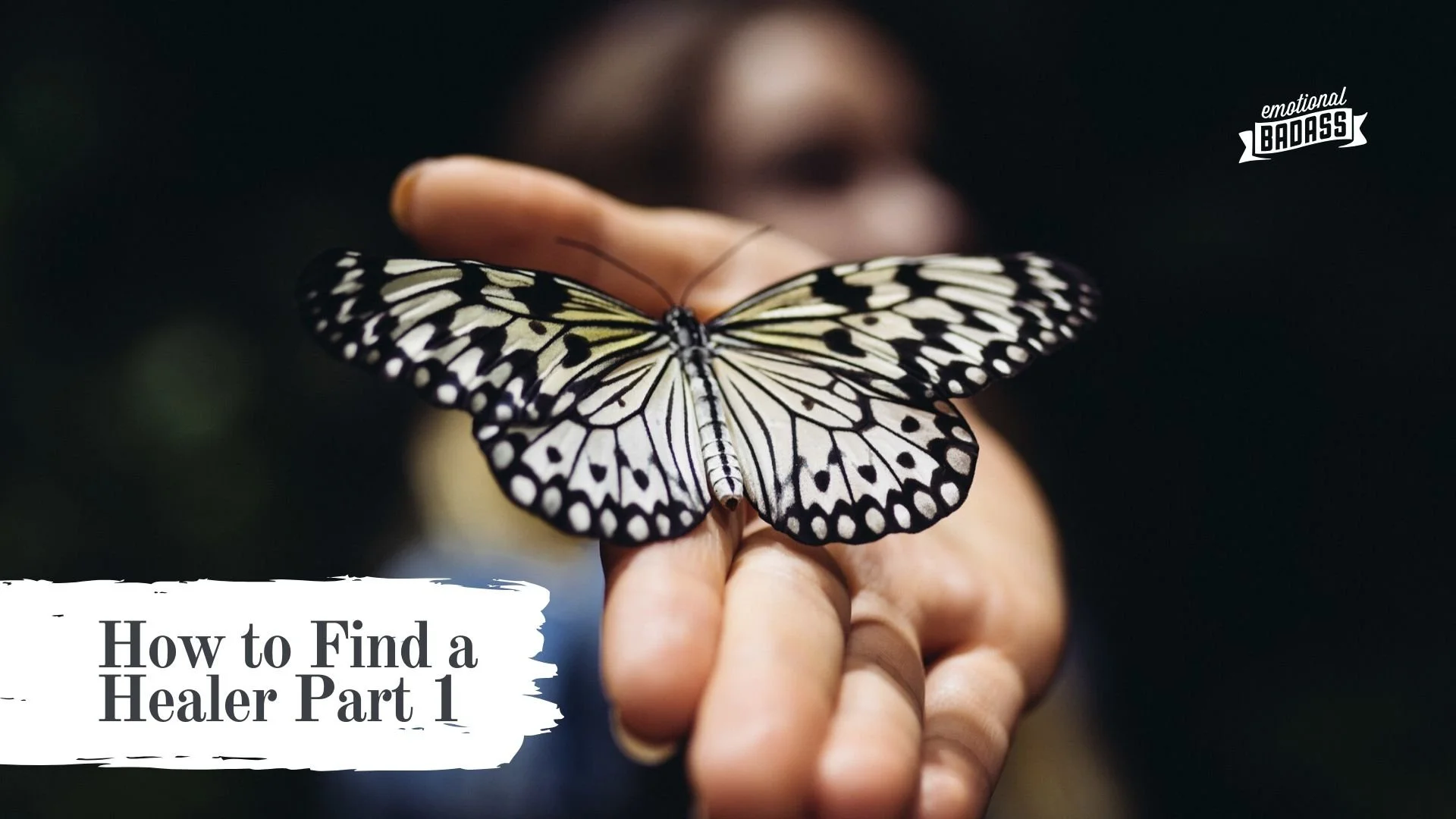
Some people bloom late emotionally. Like a caterpillar cocooning, going through a deep process within, a butterfly emerges. Same creature and yet different. These are the people who can come out of mild to moderate to severe dysfunction and offer a meaningful "I'm sorry. I have regrets about the way I was. I didn't know what I didn't know. I see things differently now."
Toxic dysfunction does not cocoon, y'all. It does not self-reflect. It does not engage any process that would allow for change. For a human to change anything, the first requirement is acknowledging that something is off. Much toxicity sits with people who are fully confident nothing needs addressing. Nobody can offer feedback about anything. That way of being is a masterclass in self-absorption. That way of being is exactly what keeps a person rooted in dysfunction for a lifetime.
Worth sitting with: anyone deeply concerned about being an asshole is already likely not an overall asshole. We all have asshole moments as human beings. But a real asshole is fully confident of not being one. Drinks the Kool-Aid. Dismisses feedback. Has too low of empathy to care about being hurtful or difficult. That discernment between inadequate dysfunction and truly toxic dysfunction is where everything begins.
What Toxic Relationships Leave a Highly Sensitive Nervous System With
Coming out of a truly toxic relationship is a process of unfucking your body and mind. That is the bluntest, most honest way to say it. What toxic relationships leave a sensitive nervous system with is a jumbled mind that does not know what to trust, where to trust, who to trust, how to ground, or what to do next. Your decision making feels broken. Healing is the process of coming back to yourself, rebuilding trust in your own critical thinking, your own discernment, your own ability to assess each moment: is this reasonable or is this dysfunctional? What is my role here? That assessment requires a LOT of discernment coming out of toxic relationships.
The Dysfunction Management Job That Paid You Nothing
Managing another person's dysfunction is a very popular job for highly sensitive people coming out of dysfunctional childhoods. It is a job you were never qualified for, could never have been successful at, and a job that in the end paid shit and burnt you out.
How Toxic Dynamics Train Your Nervous System Against Boundaries
Here is where the specifics matter. Toxic relationships do not just cross your boundaries. Toxic dynamics systematically train your nervous system to believe that having boundaries is dangerous, pointless, or proof that something is wrong with you.
The lessons your nervous system absorbs inside toxic relationships are painfully specific:
Boundaries get turned into accusations
Access to you becomes an entitlement
Your no gets renegotiated and pressured until you break
Simple limits require a courtroom-level defense
Self-protection gets flip-flopped into cruelty
Your empathy becomes the sneaky side door back in
That first lesson lands hard and early. "I'm not available for this" or "I'm not willing to discuss this until we are calmer" gets translated into "You don't care about me." Escalation follows. The message your nervous system absorbs: you are not allowed to have a boundary. If you try to set a limit, if you refuse to say yes, your present moment becomes absolute living hell.
The teaching is clear. Your place is not rocking the boat. Going along as if you were a person without opinion, without desire, without input, without mattering. Over time, this is how a highly sensitive person becomes beaten down in spirit inside a toxic relationship. The takeaway is devastating: boundaries are not worth it. Better to keep going along to get along. That message will depress you. It is like laying down in the middle of a street.
Then access to you becomes an assumed entitlement. You are not the shepherd of yourself. A toxic personality, much like a toddler with a parent, operates from full entitlement to your time, your attention, your body, your energy, your money, your autonomy. You do not get to decide where you go. You do not get privacy. Total transparency is demanded as proof of dedication, but that demand only runs one direction. The toxic person gets separate money, separate privacy, separate rules. The rules never apply both ways. It is the height of hypocrisy.
If your life and your being are treated as someone else's property while that person keeps full ownership of self, that is not a balanced relationship. The deeper message your nervous system absorbs: you have no boundaries here. Full access is owed. More power lives in this person's psyche than you are allowed to have in your own. You are going to agree to call this love.
Every day you show up for this, it is like signing a daily contract. Yes, I am okay with all these terms. Even when your heart and your gut and your mind are screaming that something is fundamentally wrong. Even when it is making you physically sick.
Boundaries also get punished instead of respected. Toxic punishment can be very creative. Very nuanced. Very specific to what will push your specific buttons. The silent treatment, if growing up with the silent treatment is your wound. Eye rolling. Being ignored while speaking. Sulking. Crappy energies thrown around for you to guess about.
An abuser figures out your buttons like a hacker figures out passwords. If one technique does not work, a different one gets tried until the right trigger is found. The purpose is to keep you destabilized, guessing, anxious, raw, so you cannot do your best thinking and get out.
The difference between inadequate dysfunction and toxic dysfunction shows up here too. An inadequate person can start to see the damage and say "I need to do better." A toxic person will not get there. You could line up 5,000 experts to offer feedback. Not a single piece of it will land.
Then your no gets renegotiated. The conversation does not end when you answer. Your no becomes a fun challenge, a campaign to wear you down. The pressure can go on for years. YEARS. Until out of sheer exhaustion you cave and say fine, just leave me alone.
What makes this sickeningly clear is what happens AFTER you finally give in. The rules change again. The thing that was pressured for years suddenly becomes the thing that gets policed. The game was never about the specific request. It was about power. About keeping you off balance. You were a toy, and the rules of the game changed whenever it suited the one holding power.
Safer people do not make a big deal out of a no, y'all. Even if disappointed, safer people do not pressure against your no. Safer people do not make you feel like a hurtful, horrendous person for saying no thanks, I will pass, that is not my thing, I am not interested.
On top of everything else, simple limits start requiring a courtroom-level defense. Raise your hand if you have felt like a lawyer going to trial over what you bought at the grocery store or why you want dinner with a platonic friend. If you feel like you must explain and prove and justify and make your boundary emotionally comfortable before it receives a queenly or kingly stamp of approval.
No wonder highly sensitive people with toxic relationship histories are exhausted. We overthink. We overexplain. We do a full-time job in our heads and lives of being full-blown defense attorneys to manage simple moments of a day while not being paid a single cent for it.
Who the hell would be a lawyer for no pay? Highly sensitive people.
A healthy boundary is not an airtight legal case, y'all. A boundary is simple. It helps you manage what you have the full right to control. Imagine the freedom of creating and executing a boundary without drafting an entire courtroom-ready argument. The energy and life force that could be saved.
The Toxic Flip Flop With Self-Protection
Your refusal to participate in dysfunction becomes the alleged dysfunction. Self-protection gets reframed as cruelty. Self-respect gets flipped into "you are abandoning me." This is designed to use your empathy against you, to get you to throw away self-care, self-respect, self-direction, and personal power.
A reasonably healthy adult does not balk at you taking care of yourself. In fact, healthy people feel safer around visible self-respect. Your independence reads as a beautiful green flag to safe people. But in toxic dynamics, flags get flip-flopped. Your independence waves the red flag of losing control. Toxic dynamics reward compliance and destabilize independence. The worst thing you can cultivate in an abuser's eyes is your own independence, which means every effort toward gaining ground underneath your feet gets actively destabilized.
If you are currently in a dangerous relationship, please reach out to proper authorities, helplines, shelters, or churches in your area. Do not let shame push you into hyper-independence. Strength knows how to pull in even more strength and support.
Your Empathy Is the Sneaky Side Door in Toxic Relationships
When pressuring fails, when shaming fails, when exhausting you into compliance fails, your empathy becomes the sneaky side door. Wounds get presented beneath bad behavior. You, as a highly sensitive person, sense that those wounds are real. Seeing those wounds activates your hope and your compassion, and that overrides your discernment.
Picture this: you are being strangled, and in that moment, your thoughts go to compassionately understanding what might have happened to create such behavior. Who is more off-base in this scenario? This is what so many highly sensitive people do inside toxic relationships, especially empaths. If you are being strangled, it is not the time for compassion. It is not the time for understanding. It is the time to bite, to kick, to scratch, to scream, to fight for your one precious life.
Empathy without boundaries can mean death. Physically. Mentally. Emotionally.
Coming Back to Yourself After Toxic Relationships
Personal ownership sounds like this: I participated in relationships that were very damaging, and I ignored the damage while it was happening. Even when I was emotionally bleeding from it. I talked myself in circles to avoid changing.
Personal ownership also sounds like this: I am sorry for what my younger self did not know yet. I know now. I am open to continue learning. I can look back and see it. When I was inside of it, perspective was much harder to find.
I am committed to never allowing a toxic relationship to take me over again. That is my commitment to myself. That is self-love in action.
We are worth this work. It is so much better to live on the other side of this pain. Not just in idea form. Not just in mental thought. In action. In self-respect. In practice.
Light and love, y'all.
Episode Tags
- ADD 1
- Abuse 17
- Alcohol 3
- Anger 11
- Archetypes 1
- Bullying 6
- Childhood 38
- Codependency 11
- Covid 4
- Crystal Catalina 4
- Depression 15
- Detachment 2
- Disassociation 4
- Discomfort 1
- Emotions 75
- Existentialism 2
- Faith 1
- Family 28
- Fatigue 4
- Focus 3
- Gratitude 12
- Grief 14
- Guilt 2
- Healers 7
- Healing 52
- High Sensation 4
- Hope 1
- Hypervigilance 7
- Introverts 6
- Lonliness 10
- Love 3
- Manifesting 5
- Manipulation 20
- Masculinity 1
- Men 1
- Mindfulness 39
- Money 10
- Music 3
- Nutrition 2
- Overthinking 8
- PTSD 13
- Parenting 12
- People Pleasing 10
- Perfectionism 8
- Pets 4
- Relationships 23
- Resiliency 14
- Sadness 1
- Self Esteem 19
- Self Love 11








Episode Tags
- ADD 1
- Abuse 17
- Alcohol 3
- Anger 11
- Archetypes 1
- Bullying 6
- Childhood 38
- Codependency 11
- Covid 4
- Crystal Catalina 4
- Depression 15
- Detachment 2
- Disassociation 4
- Discomfort 1
- Emotions 75
- Existentialism 2
- Faith 1
- Family 28
- Fatigue 4
- Focus 3
- Gratitude 12
- Grief 14
- Guilt 2
- Healers 7
- Healing 52
- High Sensation 4
- Hope 1
- Hypervigilance 7
- Introverts 6
- Lonliness 10
- Love 3
- Manifesting 5
- Manipulation 20
- Masculinity 1
- Men 1
- Mindfulness 39
- Money 10
- Music 3
- Nutrition 2
- Overthinking 8
- PTSD 13
- Parenting 12
- People Pleasing 10
- Perfectionism 8
- Pets 4
- Relationships 23
- Resiliency 14
- Sadness 1
- Self Esteem 19
- Self Love 11
Recent Episodes:

Upcoming Events


For the Highly Sensitive Person who wants meditation without distraction. No intros, no explanations, no outros. Just you, Nikki, and meditation. This pack includes 6 separate tracks and over and hour of audio meditations in HD quality. Using mindfulness, we focus the mind and train your attention and awareness, to achieve a mentally clear and emotionally calm and stable state. Meditation may help reduce stress, anxiety, depression, and pain, and enhance peace, perception, self-concept, well-being, and improve our overall mental-health.
*All files are 320k/MP3 format.
Coping Strategy for Stress and Flow (11:52)
Overcoming Bullying Meditation & Mantra (13:10)
Forest Meditation - An immersive nature experience (22:13)
Cultivating Safe Space Within (19:21)
The Space Between Meditation (10:16)
Binaural Beats Brain Wave Trance Experience (14:02)
*Bonus - Binaural Beats Brain Wave Trance Experience - Instrumental Version (14:02)