
Fleeing Discomfort is Keeping you Stuck | PART 1
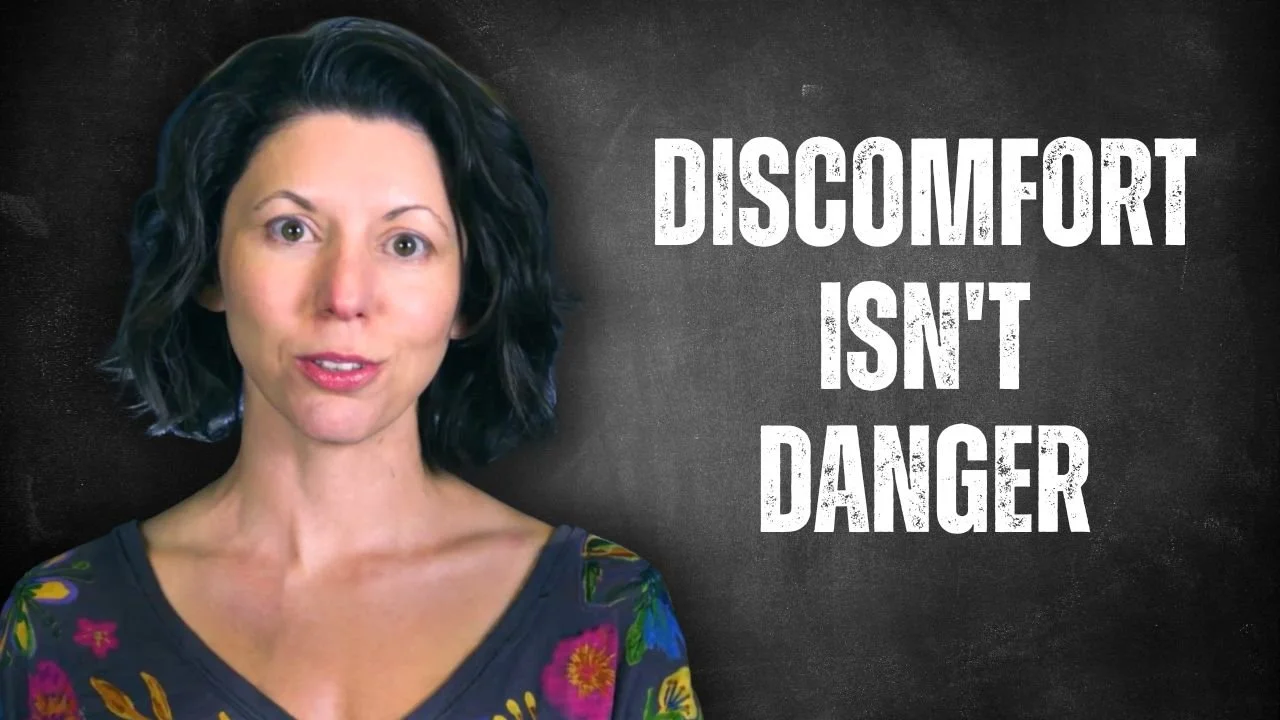
Do you expect to build a rich, meaningful life while feeling comfortable all the time?
Nervous system regulation has become one of the most talked about concepts in mental health. Scroll any platform for five minutes and you'll find short-form videos compressing complex emotional work into catchy slogans. Quick fixes. Mental health fast food. But your mind and body aren't looking for another snack. What you're hungry for, if you're drawn to this kind of deeper work, is a full whole foods meal. One that takes longer to prepare. One that asks more of you.
You're worth these nourishing meals.
The misconceptions spreading online about how to regulate your nervous system aren't just inaccurate. For highly sensitive people, empaths, and trauma survivors, these misconceptions are quietly keeping you stuck in survival mode.
Why Quick Fix Nervous System Advice Fails Highly Sensitive People
Nuance doesn't perform well on social media. Short-form videos compress complex ideas into promises of immediate relief, and we live in a quick fix culture that is slowly, almost accidentally, atrophying our capacity for patience. Pop a pill. Find the hack. Mental health fast food doesn't regulate your nervous system. It gives you the illusion of understanding without the depth that changes anything.
The First Misconception About Nervous System Regulation: Activation Means Something Is Wrong
Activation is part of being alive. The goal of nervous system regulation isn't to never feel activated. The goal is learning to recover and choose wisely while staying present. Instead of letting activation trigger the same old fear, anxiety, overwhelm, and survival stories, those neuropathways that bore deep grooves you're trying to fill in, you learn to slow down. Breathe. Question your thoughts instead of letting those old patterns push you to the edge. Grow the muscles that help you respond instead of react. This is emotional strength training.
The reframe: If I'm activated, I slow down and get curious.
One of those sends you spiraling into survival mode. The other keeps your feet on the ground.
Discomfort Isn't Danger: The Misconception Keeping Highly Sensitive People in Survival Mode
This is where it gets critical for highly sensitive people and trauma survivors.
Misconception: An uncomfortable feeling is a sign I should leave.
So many people think this is respecting the nervous system. But discomfort is not a single thing. Discomfort can be danger. Discomfort can also be growth. Wisdom is learning the difference, and that wisdom only comes through lived experience, not scrolling past a catchy slogan.
Stoicism teaches that the obstacle really is the way. Working through appropriate discomfort builds grounding. It builds confidence, security, and it expands the choices available to you in any given moment.
One of the most common traps for trauma survivors is the belief that healing has a ceiling. That you've gone as far as you can go. Severe post-traumatic stress symptoms can begin in childhood and persist well into adulthood. The assumption that a ceiling has been reached can feel absolutely real. But far more healing is available than most people are led to believe.
Where does that healing live? In lifestyle. In mindset. In daily choices. In engaging the power you have to choose. There's a lot in this life you don't get to choose. But there is enormous power in what you do.
This is emotional strength training for your nervous system. You don't want to accidentally have an avoidance muscle getting strength trained instead.
Medication has its place. No criticism here for anyone who chooses it through true informed consent. The deeper question is whether we've become too quick to assume discomfort is pathology instead of asking whether this discomfort is trying to show us something important. Whether it's asking something of us.
You can choose to be the victim of your feelings. Or you can choose to extract the wisdom from those feelings, like juice from an orange.
The serenity prayer holds something powerful regardless of your spiritual language. May whatever you believe is bigger than you on this planet grant you the serenity to accept what you cannot change, the courage to change what you can, and the wisdom to know the difference.
Lifestyle. Language. The way you encourage yourself. These are things you have the power to change. These are the places where profound healing happens. Not like a light switch getting flipped and the room is suddenly bright. More like strengthening muscles over time.
When you engage this kind of emotional strength training daily, you start to show your inner child that life doesn't have to be run by fear. Every time you lean into appropriate discomfort instead of fleeing it, you're building evidence for your nervous system that you can handle what comes.
Ease often comes after experience, not before. If you're expecting ease to arrive before you've had the experience, you're making life very small.
The reframe: An uncomfortable feeling is an invitation to explore and evaluate. Is this danger, or is this a potential teacher? Is there something I can learn here?
One approach is grounding. The other is rooted in reaction and decisions made from anxiety.
Can you feel the difference?
"My Nervous System Doesn't Like This"
This phrase has become a mantra online. It deserves a more nuanced response than social media allows. Maybe your nervous system genuinely doesn't like what's happening. But also:
Maybe you're just inexperienced
Maybe you're grieving or you slept poorly
Maybe you're confronting reality
Maybe you're hungry, angry, lonely, or tired
Maybe you're doing something courageous for the very first time
Starting a podcast felt like walking through a crowded city completely naked every single week. Painfully uncomfortable. That anxiety doesn't live in the body anymore because the discomfort got walked through instead of run from. The only way through is through, y'all. This is why learning the difference between judgment and discernment matters so much for highly sensitive people working to regulate the nervous system.
The reframe: I can discern whether this discomfort is asking me to protect myself or inviting me to grow.
The Avoidance Misconception That Keeps Your Nervous System in Survival Mode
Misconception: I should avoid anything that dysregulates me.
Chronic overwhelm and post-traumatic symptoms deserve respect. But learning to regulate your nervous system doesn't come from avoiding all the things. Ordinary stress, healthy conflict, personal challenge are important stressors for building emotional strength. Think about what happens when someone is in a coma for a year. Muscles atrophy. Bones lose strength. Use it or lose it applies to emotional lives just as powerfully as physical bodies.
Uncertainty is a necessary beast for highly sensitive people. We have to step into the unknown. When we do, we grow resilience. We show ourselves and our inner child: I can handle this. I don't have to be so scared because I can figure it out when I get there.
If avoidance becomes a belief system, you're building your life on a foundation of fear and hypervigilance. You're in survival mode. Living inside of fear and giving energy to escapism ends up actually dysregulating the nervous system anyway. We have friction down here on earth. Conflict and contrast exist to grow us. To make us stronger.
Fear was meant to motivate wise action, self-protective action. Not become the water you steep yourself in, like some kind of twisted up teabag.
The reframe: I can avoid what is dangerous. I can lean into what helps me emotionally strength train. I'm learning the difference for the rest of my life.
Emotional Strength Training Is Depth Work
Not a quick fix. Not smacking a bandaid on something. It's cleaning out the wound and supporting yourself through the inherent pain of that cleaning. You've got to get in there, y'all, or the wound will fester. Then cleaning it out gets harder, trickier, and more painful. Not less.
Far more healing is available than most of us have been led to believe. If you're struggling to hold that belief right now, it can be held for you until you learn how to hold it for yourself.
There is so much more peace and ease and spaciousness and lightness waiting for you.
Light and love, y'all.
Episode Tags
- ADD 1
- Abuse 17
- Alcohol 3
- Anger 11
- Archetypes 1
- Bullying 6
- Childhood 38
- Codependency 11
- Covid 4
- Crystal Catalina 4
- Depression 15
- Detachment 2
- Disassociation 4
- Discomfort 1
- Emotions 75
- Existentialism 2
- Faith 1
- Family 28
- Fatigue 4
- Focus 3
- Gratitude 12
- Grief 14
- Guilt 2
- Healers 7
- Healing 52
- High Sensation 4
- Hope 1
- Hypervigilance 7
- Introverts 6
- Lonliness 10
- Love 3
- Manifesting 5
- Manipulation 20
- Masculinity 1
- Men 1
- Mindfulness 39
- Money 10
- Music 3
- Nutrition 2
- Overthinking 8
- PTSD 13
- Parenting 12
- People Pleasing 10
- Perfectionism 8
- Pets 4
- Relationships 23
- Resiliency 14
- Sadness 1
- Self Esteem 19
- Self Love 11








Episode Tags
- ADD 1
- Abuse 17
- Alcohol 3
- Anger 11
- Archetypes 1
- Bullying 6
- Childhood 38
- Codependency 11
- Covid 4
- Crystal Catalina 4
- Depression 15
- Detachment 2
- Disassociation 4
- Discomfort 1
- Emotions 75
- Existentialism 2
- Faith 1
- Family 28
- Fatigue 4
- Focus 3
- Gratitude 12
- Grief 14
- Guilt 2
- Healers 7
- Healing 52
- High Sensation 4
- Hope 1
- Hypervigilance 7
- Introverts 6
- Lonliness 10
- Love 3
- Manifesting 5
- Manipulation 20
- Masculinity 1
- Men 1
- Mindfulness 39
- Money 10
- Music 3
- Nutrition 2
- Overthinking 8
- PTSD 13
- Parenting 12
- People Pleasing 10
- Perfectionism 8
- Pets 4
- Relationships 23
- Resiliency 14
- Sadness 1
- Self Esteem 19
- Self Love 11
Recent Episodes:

Upcoming Events


For the Highly Sensitive Person who wants meditation without distraction. No intros, no explanations, no outros. Just you, Nikki, and meditation. This pack includes 6 separate tracks and over and hour of audio meditations in HD quality. Using mindfulness, we focus the mind and train your attention and awareness, to achieve a mentally clear and emotionally calm and stable state. Meditation may help reduce stress, anxiety, depression, and pain, and enhance peace, perception, self-concept, well-being, and improve our overall mental-health.
*All files are 320k/MP3 format.
Coping Strategy for Stress and Flow (11:52)
Overcoming Bullying Meditation & Mantra (13:10)
Forest Meditation - An immersive nature experience (22:13)
Cultivating Safe Space Within (19:21)
The Space Between Meditation (10:16)
Binaural Beats Brain Wave Trance Experience (14:02)
*Bonus - Binaural Beats Brain Wave Trance Experience - Instrumental Version (14:02)