
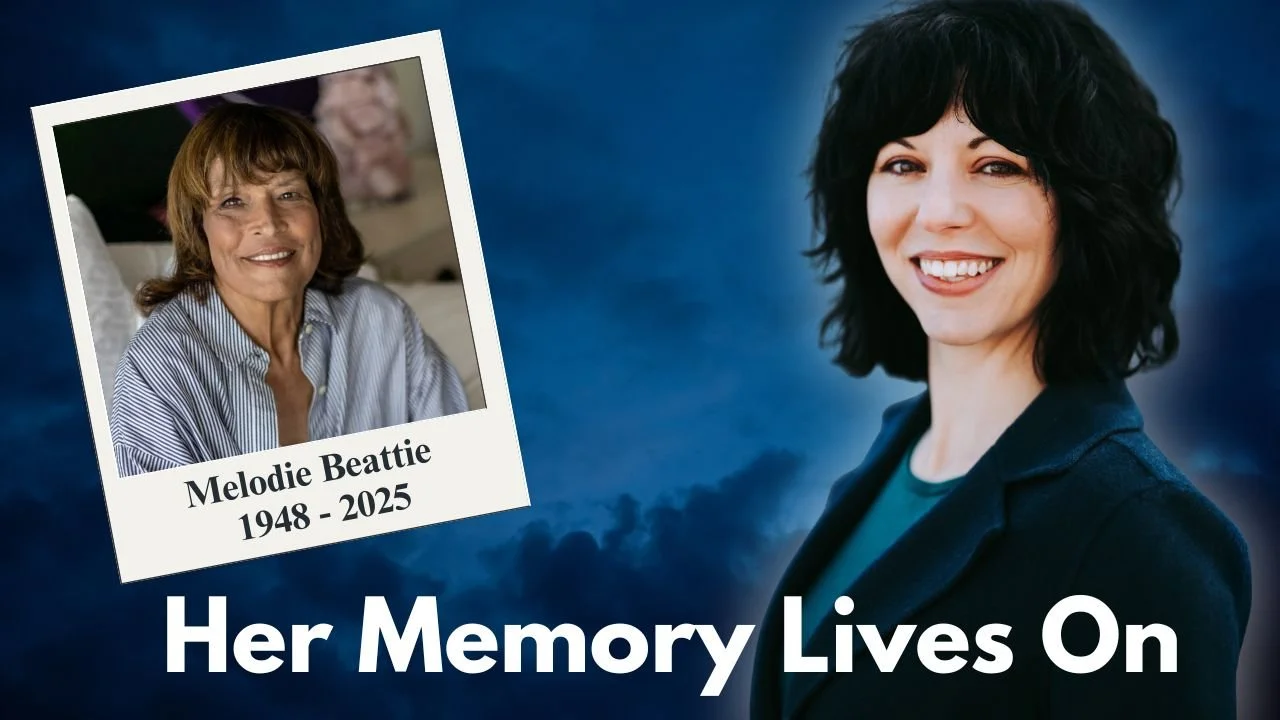
HSPs, People Pleasing & Melody Beattie's Impact
What would it mean to finally believe that taking care of yourself isn't selfish?
For highly sensitive people and empaths, that question cuts deep. Many grew up in homes where selfishness was treated as one of the worst things a person could be. The programming ran early and ran hard. Codependency and people-pleasing became survival strategies, not character flaws. Melody Beattie spent her career naming that dynamic with clarity, and her work continues to reach HSPs, trauma survivors, and anyone in codependency recovery who is still unlearning what they were taught about their own worth.
Melody Beattie's Legacy in Codependency Recovery
Codependent No More was published in 1986. Decades later, it still reads as current.
Beattie gave language to patterns that millions of people-pleasers had been living inside of without a name for them. For empaths and HSPs who grew up in high-stress or emotionally neglectful homes, her writing offered something rare: permission to exist without earning it. Her books didn't demand arrival. They met readers exactly where they were and held the possibility of something better until they were ready to reach for it. There's a particular kind of healing that happens when a book holds a concept patiently, year after year, until the reader finally grows into it. For trauma survivors who never received that steadiness from the people around them, Beattie's work functioned as a form of reparenting that asked nothing in return.
People Pleasing as Survival, Not Weakness
People-pleasing doesn't develop in a vacuum.
For most HSPs and trauma survivors, it began as a way to manage unpredictable environments. If keeping the peace meant staying safe, the nervous system learned to prioritize others' comfort over personal needs. Codependency recovery isn't about becoming someone different. It's about peeling back the programming that told you your needs were the problem. Beattie's core message cuts through: taking care of yourself isn't selfish. It's essential.
The Perfectionism Trap: The Longest Battle for Highly Sensitive People and Empaths
Perfectionism is one of the most common and least examined patterns in HSPs, empaths, and trauma survivors. It doesn't announce itself. It shows up dressed as ambition, as conscientiousness, as caring deeply about doing things right. For highly sensitive people, who already process the world at a deeper level than most, perfectionism has particularly fertile ground to take root in. The nervous system of an HSP picks up on every signal, every subtle shift in the room, every unspoken expectation. Perfectionism takes all of that input and turns it into pressure.
Consider what perfectionism actually creates in codependency recovery:
Believing you must fix everything at once or you're failing
Feeling like there is never enough time to heal
Measuring progress against an impossible standard
Using self-criticism as motivation instead of self-compassion
Believing that slowing down means falling behind
Treating healing like a performance that others are evaluating
The pressure to have it all figured out right now doesn't accelerate healing. It extends the hard part. And for people-pleasers, perfectionism has a particularly cruel edge because it doesn't just demand personal excellence. It demands that you manage everyone else's experience of you at the same time. You have to be healing correctly, visibly, on a reasonable timeline, without burdening anyone with the mess of it.
Beattie's wisdom cuts straight through: you don't have to do it all at once. You just have to do it. One step. One day. One moment at a time. The nervous system cannot sprint forever. A cheetah, built specifically for speed, can only run in short bursts before it keels over and dies. Sustained urgency is not a healing strategy. It is exhaustion wearing the costume of productivity, and for HSPs and empaths who were raised in chaotic or high-pressure homes, that urgency can feel so familiar it reads as normal.
What makes Beattie's framing so useful for trauma survivors is that it removes the performance element entirely. You don't have to do it well. You don't have to do it fast. You don't have to do it in a way that makes sense to anyone watching. You just have to do it. That quiet permission is something many highly sensitive people and recovering codependents have never genuinely been given. The inner critic, that relentless voice that has been running the show since childhood, will resist it loudly. Codependency recovery is, in part, the long work of learning to act anyway.
What HSPs Can Learn From Beattie on Gratitude
Beattie wrote that gratitude unlocks the fullness of life and turns what you have into enough. For highly sensitive people who live in the gap between where they are and where they think they should be, that is a practice, not a platitude. Perfectionism feeds that gap constantly. Codependency recovery asks you to stop measuring your life against an imaginary standard and start recognizing what is already present. That's not passive. It's an active choice to stop letting the gap define you.
Nervous System Healing and Letting Go
Trauma survivors and highly sensitive people often carry nervous systems that learned life is war.
Beattie's instruction on change is three words: let go, let it be, let it happen. For anyone in codependency recovery who has spent years white-knuckling through uncertainty, simple doesn't mean easy. The nervous system doesn't release control without resistance. It was built to hold on, and that vigilance kept many HSPs and empaths safe in childhood. In adulthood it costs them enormously. Fighting every unchosen outcome keeps the body locked in survival mode far longer than necessary. When highly sensitive people stop resisting what cannot be controlled, they free up energy to navigate what can be. That shift from haphazard reaction to conscious decision is where nervous system healing actually begins. It is slow, nonlinear, and worth every bit of the work.
Self-Worth Is Not Earned
Trees don't earn the rain. Stars don't justify their place in the sky.
Beattie wrote that you are a child of the universe, no less than either. For trauma survivors and people-pleasers who grew up believing worth was conditional, that logic can take years to move from the mind into the body. Worth doesn't shift based on performance, mistakes, or how well you managed someone else's emotions. Returning to that fixed point again and again, until it becomes the ground you actually stand on rather than just an idea you intellectually agree with, is some of the most important work in codependency recovery.
Accepting a circumstance doesn't mean you think it's fair. It means you stop telling your nervous system that where you are right now is unsurvivable. That single shift, from "this is not okay" to "this is where I am right now, and it is okay," removes the secondary layer of suffering that comes from fighting what already exists. For empaths and people-pleasers in codependency recovery, that is not a small thing.
Beattie on Reparenting for HSPs and Empaths
Her writing held concepts patiently, without shame, without deadlines, waiting for readers to grow into them.
For highly sensitive people who grew up without consistent emotional safety, that quality is exactly what was missing. Beattie's books met people in their second and third rounds of awakening, holding ideas until they were ready to be received. That kind of steady, non-shaming presence is itself a model for how HSPs and trauma survivors can begin to relate to themselves differently. Codependency recovery asks you to become that steady presence for your own inner life. Beattie's work shows what that looks like from the outside, and gives you something to orient toward on the inside.
The Right-Wrong Scale and The HSP Path Through People Pleasing and Codependency
Beattie identified something in 1986 that still describes the current cultural moment: the right-wrong justice scale. In systems built on that scale, being right meant safety and being wrong meant shame. For HSPs raised under that dynamic, defending a position wasn't ego. It was survival.
Codependency recovery asks you to strive for love in relationships rather than superiority. Connection built on righteousness is just control wearing a friendlier face.
People-pleasing buries intuition. When the nervous system has spent years reading other people's needs before your own, that quieter internal signal gets completely drowned out. Codependency recovery, for HSPs and empaths, involves learning to trust it again. Not the overworked calculating mind that measures every choice against what others might think, but the part of you that knows there is something here for me. Beattie's work points consistently back to the self as the source. The path through people-pleasing runs inward, and it always has.
Episode Tags
- ADD 1
- Abuse 17
- Alcohol 3
- Anger 11
- Archetypes 1
- Bullying 6
- Childhood 38
- Codependency 11
- Covid 4
- Crystal Catalina 4
- Depression 15
- Detachment 2
- Disassociation 4
- Discomfort 1
- Emotions 75
- Existentialism 2
- Faith 1
- Family 28
- Fatigue 4
- Focus 3
- Gratitude 12
- Grief 14
- Guilt 2
- Healers 7
- Healing 52
- High Sensation 4
- Hope 1
- Hypervigilance 7
- Introverts 6
- Lonliness 10
- Love 3
- Manifesting 5
- Manipulation 20
- Masculinity 1
- Men 1
- Mindfulness 39
- Money 10
- Music 3
- Nutrition 2
- Overthinking 8
- PTSD 13
- Parenting 12
- People Pleasing 10
- Perfectionism 8
- Pets 4
- Relationships 23
- Resiliency 14
- Sadness 1
- Self Esteem 19
- Self Love 11








Episode Tags
- ADD 1
- Abuse 17
- Alcohol 3
- Anger 11
- Archetypes 1
- Bullying 6
- Childhood 38
- Codependency 11
- Covid 4
- Crystal Catalina 4
- Depression 15
- Detachment 2
- Disassociation 4
- Discomfort 1
- Emotions 75
- Existentialism 2
- Faith 1
- Family 28
- Fatigue 4
- Focus 3
- Gratitude 12
- Grief 14
- Guilt 2
- Healers 7
- Healing 52
- High Sensation 4
- Hope 1
- Hypervigilance 7
- Introverts 6
- Lonliness 10
- Love 3
- Manifesting 5
- Manipulation 20
- Masculinity 1
- Men 1
- Mindfulness 39
- Money 10
- Music 3
- Nutrition 2
- Overthinking 8
- PTSD 13
- Parenting 12
- People Pleasing 10
- Perfectionism 8
- Pets 4
- Relationships 23
- Resiliency 14
- Sadness 1
- Self Esteem 19
- Self Love 11
Recent Episodes:


Upcoming Events


For the Highly Sensitive Person who wants meditation without distraction. No intros, no explanations, no outros. Just you, Nikki, and meditation. This pack includes 6 separate tracks and over and hour of audio meditations in HD quality. Using mindfulness, we focus the mind and train your attention and awareness, to achieve a mentally clear and emotionally calm and stable state. Meditation may help reduce stress, anxiety, depression, and pain, and enhance peace, perception, self-concept, well-being, and improve our overall mental-health.
*All files are 320k/MP3 format.
Coping Strategy for Stress and Flow (11:52)
Overcoming Bullying Meditation & Mantra (13:10)
Forest Meditation - An immersive nature experience (22:13)
Cultivating Safe Space Within (19:21)
The Space Between Meditation (10:16)
Binaural Beats Brain Wave Trance Experience (14:02)
*Bonus - Binaural Beats Brain Wave Trance Experience - Instrumental Version (14:02)