
Learning Assertive Communication Styles That Work For HSPs
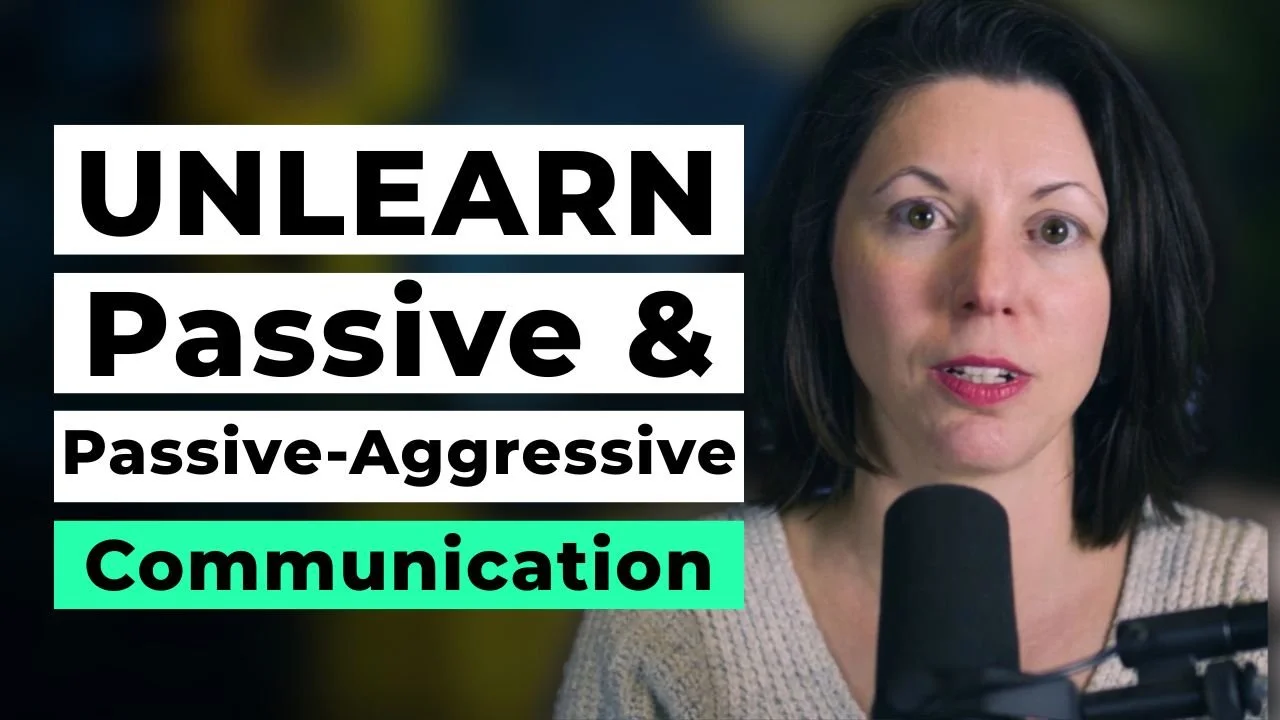
Have you ever believed you were being assertive when you were actually still operating from passivity or passive-aggressive communication?
Most highly sensitive people genuinely think they're practicing assertive communication. They believe they're setting boundaries. They assume they're speaking their truth.
But passivity runs deeper than most HSPs realize.
Why Highly Sensitive People Default to Passive Communication
Dysfunction shapes communication patterns early. Children raised with unregulated, dominating, controlling, or neglectful parenting develop strategies that keep the peace. They learn not to rock the boat. They avoid negative attention and shame. They try to win favor, approval, or even just a flicker of positive attention.
This training creates passive communication as a survival strategy.
Sensitive children in dysfunctional family systems learn that passivity feels safest. It becomes the most reliable route for navigating the perils of dysfunction. It becomes a main strategy that can follow people through their entire lives if left unaddressed.
The problem? Most trauma survivors and highly sensitive people cannot tell the difference between passive, passive-aggressive, and truly assertive communication.
The Invisibility Strategy HSPs Use to Survive
Many HSPs spent their childhoods trying to become invisible. The strategy made sense. Without receiving unconditional love, encouragement, kindness, security, and consistent positive regard from caregivers, invisibility felt like protection.
Opening your mouth felt terrifying. Asserting your voice into a room triggered fear. Even when you knew the right answer in school, speaking up seemed dangerous.
Passivity masqueraded as kindness. Going along to get along felt like being a good person. Over-accommodating and minimizing yourself seemed virtuous.
But this pattern quietly reinforced destructive beliefs:
You weren't supposed to need anything
You weren't supposed to have ideas or opinions
You weren't supposed to take up space
You had to deal with everyone else's needs, but nobody had to deal with yours
This imbalance erodes self-worth over time.
How Passive Communication Destroys Self-Worth From Within
Dysfunction and abuse start as something someone else does to you. Someone else's messaging and behavior gave you low self-esteem. But that programming creeps in. It becomes internalized.
What starts as someone else's treatment becomes self-treatment.
Living in passivity erodes you from the inside. The behavior reinforces the belief that you're a burden. That you're too much. That you're difficult, weird, or ridiculous.
For highly sensitive people navigating a world where 80 to 85% of people are not wired the same way, passivity becomes increasingly destructive. In a culture with rising entitlement, declining conscientiousness, and increasing willingness to use others, passive communication leaves HSPs vulnerable.
The choice becomes clear: evolve or lose yourself completely.
The Three Communication Styles: A Real Dating Scenario
Understanding the difference between passive, passive-aggressive, and assertive communication requires concrete examples. Abstract definitions don't work for highly sensitive people who have spent decades confusing these styles.
Consider this scenario: Margaret meets Bob on a dating app. They've been texting for a few days. Bob suggests meeting at a restaurant. Margaret looks up the address and realizes it's 45 minutes away in the opposite direction from where she lives.
Her nervous system immediately activates. Distance gets confused with danger. Without enough information or experience to truly spot danger, her history fills in gaps that have no evidence yet. Her feelings become liars in this moment.
What does Margaret do?
The Passive Response:
"That place looks great."
Period. That's it. Margaret says yes without addressing her actual truth - that it's a haul for her. Passive communication ignores your own needs entirely. You go along to get along. You abandon yourself before anyone else even has the chance to consider you.
This response gathers resentment. Margaret will drive 45 minutes feeling annoyed. She'll arrive already irritated. The date starts from a deficit because she didn't speak her truth.
The Passive-Aggressive Response:
"That place looks great, but did you think about asking me where I live first?"
This sounds assertive to many HSPs. It sounds like setting a boundary. But listen to the undertone. The question isn't actually a question. It's a veiled criticism. It's a loaded statement designed to make Bob feel bad without directly stating what Margaret actually needs.
Passive-aggressive communication creates confusion. Bob might respond defensively. He might shut down. He might not understand what Margaret actually wants because she hasn't stated it clearly.
The problem with passive-aggressive communication is the insincerity. It feels icky over time. It's a benign form of manipulation that doesn't work.
The Assertive Communication Response:
"Thank you for doing the work to pick a restaurant, but I'm not up for driving that far for a first meetup. If you'd like to choose something closer or halfway, I'm in."
Calm. Direct. No big story or 14-hour explanation attached.
Assertive communication states reality without apology. It doesn't mind read. It doesn't assume. It simply presents the truth and sees what happens.
Can you feel the difference in your body when you read each response? Passivity feels like shrinking. Passive aggression feels sneaky and uncomfortable. Assertiveness feels clean and clear.
What Assertiveness Actually Accomplishes:
Assertive communication gathers data. If Bob responds respectfully and suggests an alternative location, Margaret has learned he can be flexible and considerate. If Bob responds defensively or dismissively with "that's not that far," Margaret has learned he doesn't respect her boundaries.
Either way, assertiveness provides clarity. Passivity only gathers resentment. Passive-aggressive communication gathers confusion. Assertiveness gathers information that helps you make better decisions about relationships, work situations, and boundaries.
For highly sensitive people and trauma survivors who have spent years trying to read other people's minds and avoid conflict, this distinction matters enormously. Your nervous system has been trained to protect you through invisibility. But that protection now hurts you more than it helps.
Assertive Communication as an Interruption Pattern
Assertiveness interrupts the pattern of projecting your past onto new people. It stops the cycle of assuming the worst before you have evidence.
When your nervous system confuses distance with danger, assertive communication becomes the tool that separates past trauma from present reality. It says: I will not mind read. I will not assume. I will state my truth and gather actual data.
This practice rebuilds self-worth. Every time you speak your truth without over-explaining or apologizing, you prove to yourself that your needs matter. You demonstrate that you deserve to take up space.
For HSPs raised in dysfunction, this feels revolutionary. You spent your childhood learning that your voice was dangerous. That your needs were burdens. That speaking up brought shame or rage or disappointment.
Assertive communication rewrites that story.
Breaking Free From the Invisible Strategy
Passivity stops working when you realize it's eroding you. When you notice you've become a person without opinions, without desires, without ideas because others didn't like that version of you.
The consequences of not speaking up pile up over time. The price of trying to be a person who needs nothing becomes too high.
Boundaries become necessary. Not optional. Not something to practice when you feel confident. Boundaries become the thing that determines whether you survive with your self-worth intact.
If you oversimplify boundaries for a moment, they are simply: I'm willing to do this. I'm not willing to do this.
Assertive communication allows you to state those boundaries without 14-hour explanations. Without justifying your right to have limits. Without apologizing for existing.
What Your Nervous System Needs to Hear
Your feelings are sometimes liars. You must assess whether you have enough information or whether you can gather more to see if danger is real or projected.
History fills in gaps when evidence doesn't exist yet. Your nervous system learned to survive by anticipating the worst. That served you once. It kept you safe when you were small and powerless.
But you're not small anymore. You're not powerless. You can choose different communication styles now.
Assertiveness doesn't guarantee perfect outcomes. Bob might still respond badly. People might still disappoint you. But at least you'll have real data instead of assumptions. At least you'll know you honored yourself.
Moving Forward: Practical Steps for HSPs
Start by acknowledging when you're operating from passivity or passive aggression. Notice the feeling in your body. Notice the insincerity or the resentment building.
A beautiful first step is simply recognizing: there's a better way and I can learn it.
That interrupts the old pattern of automatically going passive or passive-aggressive. It creates space for a different choice.
Practice stating simple truths without explanation:
"I'm not available that day."
"That doesn't work for me."
"I need to think about it."
"I'm not up for that."
Notice you don't need to justify these statements. You don't need to apologize. You don't need to provide a 14-hour explanation for why you have limits.
Your truth is enough.
For highly sensitive people who have spent decades minimizing themselves, this practice feels uncomfortable at first. Your nervous system will scream that you're being rude. That you're too much. That you're going to hurt someone's feelings.
But assertive communication isn't rude. It's honest. It's clear. It respects both your boundaries and the other person's ability to handle direct information.
The more you practice assertiveness, the more you'll notice how much energy you've been wasting on passive and passive-aggressive patterns. How much resentment you've been carrying. How much confusion you've been creating.
Assertive communication brings clarity to relationships, work dynamics, and family systems. It separates people who respect your boundaries from people who don't. It shows you who's safe and who isn't.
For trauma survivors and highly sensitive people raised in dysfunction, that information is invaluable. Your whole life, you've been trying to figure out who's safe by reading subtle cues and mind reading and anticipating their needs.
Assertiveness offers a simpler path: state your truth and watch what happens.
Episode Tags
- ADD 1
- Abuse 17
- Alcohol 3
- Anger 11
- Archetypes 1
- Bullying 6
- Childhood 38
- Codependency 11
- Covid 4
- Crystal Catalina 4
- Depression 15
- Detachment 2
- Disassociation 4
- Discomfort 1
- Emotions 75
- Existentialism 2
- Faith 1
- Family 28
- Fatigue 4
- Focus 3
- Gratitude 12
- Grief 14
- Guilt 2
- Healers 7
- Healing 52
- High Sensation 4
- Hope 1
- Hypervigilance 7
- Introverts 6
- Lonliness 10
- Love 3
- Manifesting 5
- Manipulation 20
- Masculinity 1
- Men 1
- Mindfulness 39
- Money 10
- Music 3
- Nutrition 2
- Overthinking 8
- PTSD 13
- Parenting 12
- People Pleasing 10
- Perfectionism 8
- Pets 4
- Relationships 23
- Resiliency 14
- Sadness 1
- Self Esteem 19
- Self Love 11












Episode Tags
- ADD 1
- Abuse 17
- Alcohol 3
- Anger 11
- Archetypes 1
- Bullying 6
- Childhood 38
- Codependency 11
- Covid 4
- Crystal Catalina 4
- Depression 15
- Detachment 2
- Disassociation 4
- Discomfort 1
- Emotions 75
- Existentialism 2
- Faith 1
- Family 28
- Fatigue 4
- Focus 3
- Gratitude 12
- Grief 14
- Guilt 2
- Healers 7
- Healing 52
- High Sensation 4
- Hope 1
- Hypervigilance 7
- Introverts 6
- Lonliness 10
- Love 3
- Manifesting 5
- Manipulation 20
- Masculinity 1
- Men 1
- Mindfulness 39
- Money 10
- Music 3
- Nutrition 2
- Overthinking 8
- PTSD 13
- Parenting 12
- People Pleasing 10
- Perfectionism 8
- Pets 4
- Relationships 23
- Resiliency 14
- Sadness 1
- Self Esteem 19
- Self Love 11
Recent Episodes:



Upcoming Events


For the Highly Sensitive Person who wants meditation without distraction. No intros, no explanations, no outros. Just you, Nikki, and meditation. This pack includes 6 separate tracks and over and hour of audio meditations in HD quality. Using mindfulness, we focus the mind and train your attention and awareness, to achieve a mentally clear and emotionally calm and stable state. Meditation may help reduce stress, anxiety, depression, and pain, and enhance peace, perception, self-concept, well-being, and improve our overall mental-health.
*All files are 320k/MP3 format.
Coping Strategy for Stress and Flow (11:52)
Overcoming Bullying Meditation & Mantra (13:10)
Forest Meditation - An immersive nature experience (22:13)
Cultivating Safe Space Within (19:21)
The Space Between Meditation (10:16)
Binaural Beats Brain Wave Trance Experience (14:02)
*Bonus - Binaural Beats Brain Wave Trance Experience - Instrumental Version (14:02)