
The Truth About the Male Loneliness Epidemic
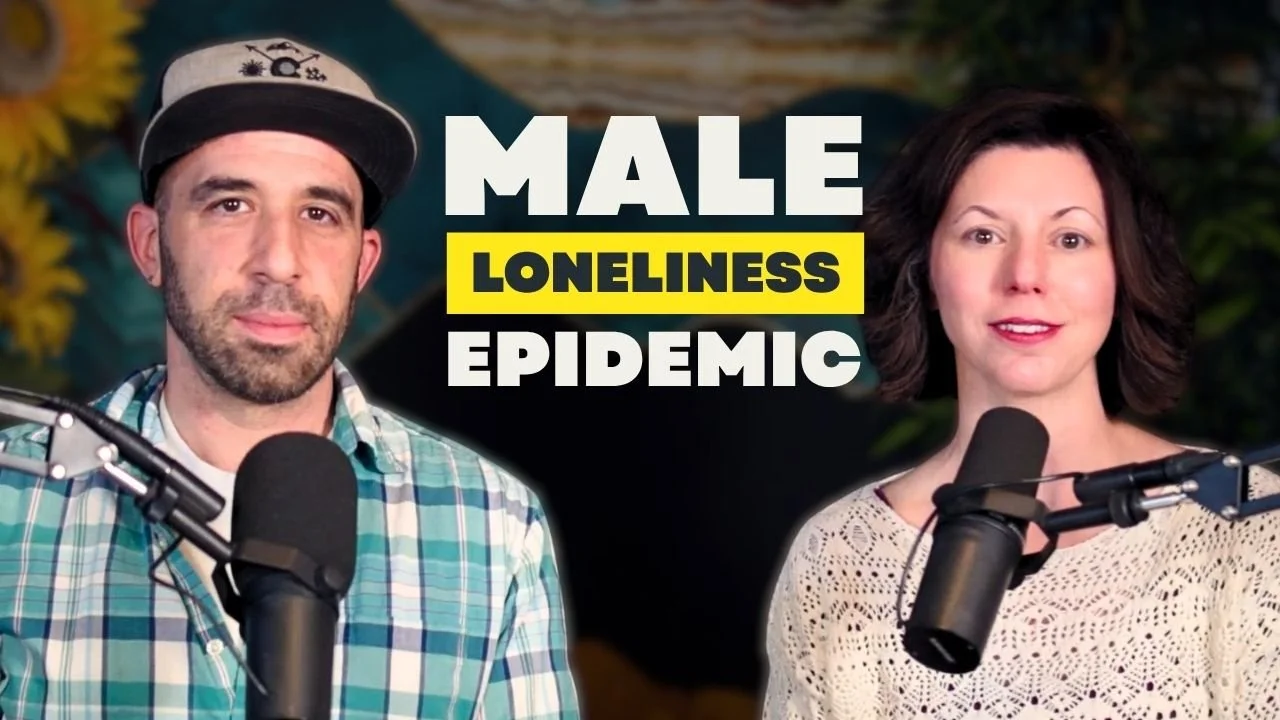
Why do you think there's a lot of lonely men?
That question cuts straight to something most people sense but rarely name directly. The male loneliness epidemic is real, measurable, and accelerating. It isn't simply about men failing to connect. It's about an entire generation navigating a world that has quietly removed most of the structures that once made human connection automatic.
Why Male Loneliness Is Getting Worse
Fifty years ago, men built barns together. Played poker. Competed in sports. Worked on cars side by side. That physical, shoulder-to-shoulder companionship wasn't incidental. It was the primary architecture of male friendships.
Most of that has moved online.
What replaced in-person gatherings is a group text with a thumbs-up emoji. A meme instead of a phone call. Online spaces feel like social connection, but lived experience and research consistently show they don't carry the same weight. There's no eye contact. No body language to read. No pheromone exchange that happens subconsciously when bodies occupy the same physical space. The male loneliness epidemic didn't emerge from nowhere. It followed the shift.
Online Dating, Swipe Culture, and the Cost to Male Mental Health
Online dating promised to solve loneliness. For a small percentage of men, it delivered. Studies suggest roughly 4% of men on dating apps receive the overwhelming majority of matches and messages. For everyone else, the experience involves months of being ghosted or passed over before a single date materializes.
That cumulative rejection takes a measurable toll on mental health.
Men already carry evolutionary wiring toward silence and stoicism. Stack repeated, anonymous rejection on top of that wiring and you create conditions for male depression to deepen without anyone naming it. The problem isn't that men are failing at dating. Swipe culture reduces a full human being to a two-second visual judgment, and most men aren't built to absorb that volume of rejection without internalizing it as a verdict on their worth. Online dating, for a significant portion of men, is making the male loneliness epidemic worse rather than better.
What Male Friendships Actually Require
Male loneliness rarely gets named for what it really is: a depth problem.
Most men have social contacts. Many have friend groups. What a significant portion of men lack is even one or two relationships where genuine vulnerability is possible. Out of ten male friends, a man might find real emotional depth with one or two. The rest remain companionable but surface-level. That gap, between social presence and actual human connection, is where male depression quietly grows.
The reason depth is rare in male friendships isn't a character failure. It's evolutionary context colliding with modern isolation.
Men were wired, over millennia, to be quiet on the hunt. Silence was survival. That hardware doesn't disappear because the threats have changed. Men are still running on old programming in a world that now requires verbal emotional fluency to form close bonds. Fathers pass this pattern down, often without realizing it. A father who was emotionally shut down models the same shutdown for a son. The generational pattern of male emotional silence doesn't break itself. It requires conscious interruption, and most men never receive the tools to interrupt it.
What actually builds depth in male friendships is shared purpose combined with physical presence. Men bond while doing things together. Building a fence. Playing board games. Working through a project side by side. The social connection that emerges during a task carries more emotional weight than a conversation that exists only as conversation. When men gather around a purpose, something opens that a group chat cannot replicate.
Physical touch matters more than most men are socialized to acknowledge. Cultures where men greet each other with embraces and walk close without a second thought tend to produce men with stronger social connection and greater emotional resilience. American culture has moved in the opposite direction. School teachers are now frequently mandated toward one-arm side hugs rather than full embraces. Those policies may protect against a small number of bad actors, but they systematically deprive children of the full-contact nurturing that builds social confidence over a lifetime.
The result is that whole generations of men grew up under-touched. People who didn't receive enough physical connection as children often don't know how to give it as adults. That deficit compounds across decades.
Alcohol temporarily fills the gap. A few drinks lower the wall, loosen the grip on stoicism, and suddenly men are hugging and getting closer. There's a reason alcohol has been the lubricant of male social bonding across cultures and centuries. It mimics depth in the short term. But alcohol doesn't build the emotional muscles required to access vulnerability without it. It's the fast food version of human connection, filling the hunger without providing real nourishment. Relying on it as the primary gateway to emotional closeness keeps men stuck rather than growing.
Building genuine male friendships in adulthood requires something that doesn't come naturally to men raised in emotionally avoidant households: repeated risk. Showing up. Inviting people. Tolerating awkwardness. Staying in a friendship through conflict rather than disappearing when things get hard. The men who have rich social circles at forty and fifty almost universally became good at making friends early, often because life forced them to practice. That skill can be built intentionally, at any age, but it requires showing up before it feels comfortable.
The male loneliness epidemic won't be solved by an app. It gets solved one intentional, in-person gathering at a time.
AI Girlfriends Are Deepening the Crisis
The latest product marketed as a solution to male loneliness is the AI girlfriend. Services offering companionship through artificial intelligence, including one widely circulated ad boasting that the AI would never say no, are gaining traction with exactly the men who can least afford to retreat further from real human connection.
An AI companion that cannot say no isn't a relationship. There's no reciprocity. No pushback. No growth through conflict or repair. What gets marketed as emotional connection in this context functions as a simulation engineered to provide the feelings of closeness without any of the conditions that make closeness real.
The mental health risk is direct. Men already struggling with social isolation will find AI girlfriends easier than human ones. That ease pulls them further from the discomfort that real relationships require. Over time, social muscle atrophies. The gap between where a man is and where he needs to be to form an actual bond with another person grows wider, not narrower. AI girlfriends don't treat the male loneliness epidemic. They accelerate it.
The Link Between Male Depression and Social Isolation
Male depression often looks different from clinical descriptions.
It shows up as irritability, withdrawal, excessive drinking, overworking, or a flat affect that gets labeled as just being a guy. Loneliness feeds all of it. When men lack outlets for competition, purpose, and physical presence with other men, something in the identity structure starts to hollow out. What am I for? What am I building? Those aren't abstract philosophical questions. For men raised with any traditional sense of purpose, the absence of real answers creates a restlessness that slides into male depression without anyone naming it.
Sports, board games, building projects, physical labor alongside other men. These are load-bearing structures for male mental health, not trivial distractions.
Rejection Resilience Is the Skill That Changes Everything
The one quality most predictive of men finding genuine human connection as adults is rejection resilience.
Rejection resilience is the ability to absorb the pain of social failure without letting it become a verdict on your worth. Every time a friendship doesn't click, a date doesn't happen, or a social gathering feels flat, rejection resilience is what allows a person to show up again anyway. Building rejection resilience means accepting that putting yourself out there repeatedly is the work itself, not a sign that something is wrong with you.
For men navigating the male loneliness epidemic, that reframe matters enormously.
Practical Steps Toward Real Social Connection
Waiting for the right social environment to materialize on its own is a strategy that doesn't work.
Showing up to an improv group, a board game night, a neighborhood project, a volunteer commitment, or anything that puts your body in a room with other people is where real social connection starts. Platforms like Meetup.com exist specifically to gather people around shared interests. The barrier is almost never access. It's tolerating the awkward early stages before genuine connection forms.
Consider what you actually enjoy doing physically:
Fixing cars or building things
Playing strategy board games
Watching or playing sports in person
Woodworking, hiking, or any outdoor activity
Creative groups or classes
Finding even one of those things in your area and showing up consistently builds the foundation. That tolerance for discomfort and early awkwardness is exactly what rejection resilience makes possible over time.
The Compounding Cost of Staying Isolated
Choosing digital substitutes over real human contact compounds quietly year over year.
Each year spent primarily online, relying on AI companions, scrolling dating apps without converting to actual meetings, or watching life happen through a screen rather than participating in it, narrows the gap between a man and his capacity for genuine social connection.
The male loneliness epidemic is, at its core, a crisis of atrophied social muscle. Muscles that don't get used weaken. The path back runs through real presence, real risk, and real relationships built through emotional resilience that only comes from practicing it in the actual world.
Episode Tags
- ADD 1
- Abuse 17
- Alcohol 3
- Anger 11
- Archetypes 1
- Bullying 6
- Childhood 38
- Codependency 11
- Covid 4
- Crystal Catalina 4
- Depression 15
- Detachment 2
- Disassociation 4
- Discomfort 1
- Emotions 75
- Existentialism 2
- Faith 1
- Family 28
- Fatigue 4
- Focus 3
- Gratitude 12
- Grief 14
- Guilt 2
- Healers 7
- Healing 52
- High Sensation 4
- Hope 1
- Hypervigilance 7
- Introverts 6
- Lonliness 10
- Love 3
- Manifesting 5
- Manipulation 20
- Masculinity 1
- Men 1
- Mindfulness 39
- Money 10
- Music 3
- Nutrition 2
- Overthinking 8
- PTSD 13
- Parenting 12
- People Pleasing 10
- Perfectionism 8
- Pets 4
- Relationships 23
- Resiliency 14
- Sadness 1
- Self Esteem 19
- Self Love 11









Episode Tags
- ADD 1
- Abuse 17
- Alcohol 3
- Anger 11
- Archetypes 1
- Bullying 6
- Childhood 38
- Codependency 11
- Covid 4
- Crystal Catalina 4
- Depression 15
- Detachment 2
- Disassociation 4
- Discomfort 1
- Emotions 75
- Existentialism 2
- Faith 1
- Family 28
- Fatigue 4
- Focus 3
- Gratitude 12
- Grief 14
- Guilt 2
- Healers 7
- Healing 52
- High Sensation 4
- Hope 1
- Hypervigilance 7
- Introverts 6
- Lonliness 10
- Love 3
- Manifesting 5
- Manipulation 20
- Masculinity 1
- Men 1
- Mindfulness 39
- Money 10
- Music 3
- Nutrition 2
- Overthinking 8
- PTSD 13
- Parenting 12
- People Pleasing 10
- Perfectionism 8
- Pets 4
- Relationships 23
- Resiliency 14
- Sadness 1
- Self Esteem 19
- Self Love 11
Recent Episodes:



Upcoming Events


For the Highly Sensitive Person who wants meditation without distraction. No intros, no explanations, no outros. Just you, Nikki, and meditation. This pack includes 6 separate tracks and over and hour of audio meditations in HD quality. Using mindfulness, we focus the mind and train your attention and awareness, to achieve a mentally clear and emotionally calm and stable state. Meditation may help reduce stress, anxiety, depression, and pain, and enhance peace, perception, self-concept, well-being, and improve our overall mental-health.
*All files are 320k/MP3 format.
Coping Strategy for Stress and Flow (11:52)
Overcoming Bullying Meditation & Mantra (13:10)
Forest Meditation - An immersive nature experience (22:13)
Cultivating Safe Space Within (19:21)
The Space Between Meditation (10:16)
Binaural Beats Brain Wave Trance Experience (14:02)
*Bonus - Binaural Beats Brain Wave Trance Experience - Instrumental Version (14:02)