
I Entered a Burro Race as a Beginner and Outran My Fear
What is the thing anxiety has been narrating you away from?
For a lot of highly sensitive people, that answer sits quietly in the background for years. A class never taken. A move never made. A pull toward something that gets argued out of existence before the first real step.
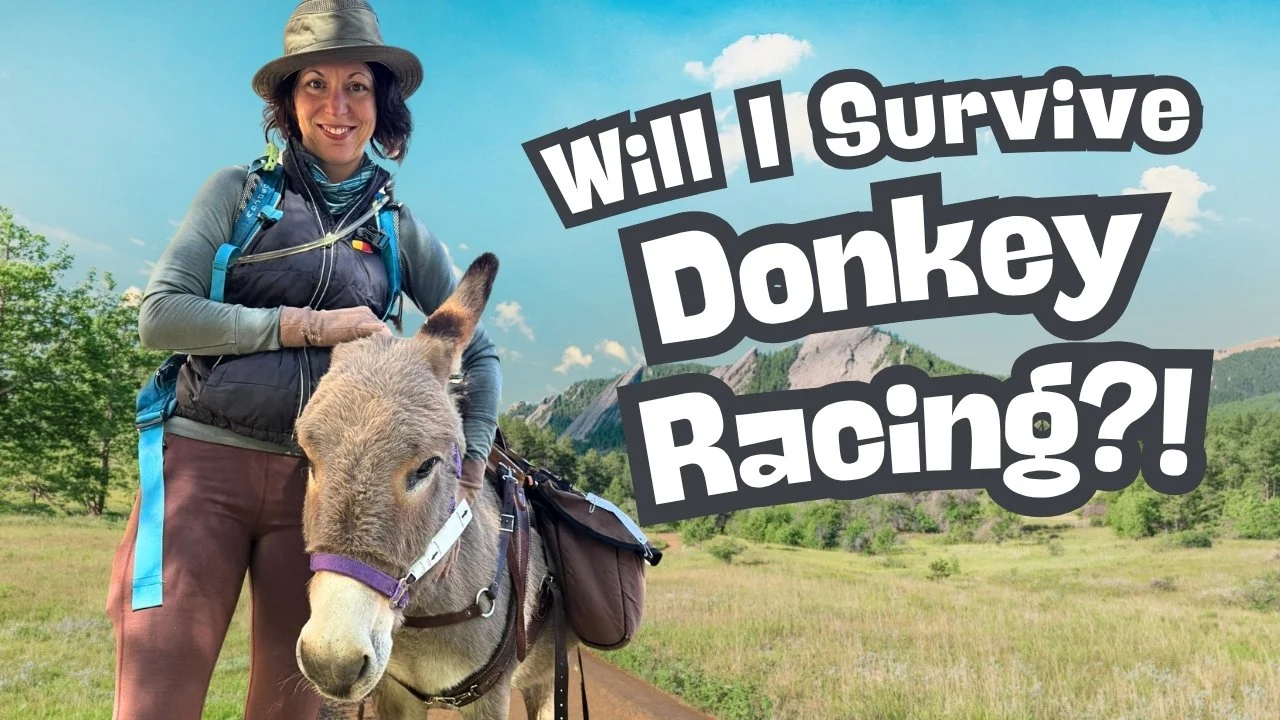
Sometimes the lesson shows up in an unlikely form. This time it arrived as a 300-pound donkey named Bonita and a six-mile race straight up a Colorado mountain, entered by a complete beginner who had fed a few donkeys carrots and watched the race once from town.
When Anxiety Runs a Propaganda Campaign
Before the starting line, the anxious mind ran a full campaign. What if I trip? What if I fall off the mountain? What if the donkey gets loose and the whole crowd hears about it? Anxiety speaks the loudest and tries to pass fear off as wisdom. Many highly sensitive people know that internal campaign well, and obeying it as truth makes a life smaller, flatter, and far less alive.
The Fear That Protects and the Fear That Limits
Protective fear and limiting fear can feel identical inside the body. Telling them apart is the work. A nervous system shaped by early neglect or high stress often reads far too much as dangerous, turning anything new into a threat and anything unfamiliar into an emergency. The nervous system braces as if survival is on the line, even when the only real risk is feeling awkward.
Healthy fear sharpens. On a trail narrow enough to drop off a cliff, that signal said one clear thing: stop overthinking and pay attention. A few questions help sort one kind from the other:
Is this actually dangerous, or only unfamiliar?
Does this protect my body, or only protect my comfort?
Will avoiding this keep me safe, or keep me stuck?
How New Experiences Calm the Nervous System and Build Confidence
Parts of the trail ran nearly vertical. Up, up, and more up. At least half of it ran close to a cliff edge where overthinking was not an option, because overthinking on a ledge with a large animal makes a fall more likely, not less. Present-moment focus stopped being a meditation app suggestion and became the whole job. Each footstep mattered. Each step of the donkey mattered. The pacing of the animals ahead and behind shaped every decision.
Out there, the nervous system learned something words cannot teach. A large animal reads your energy in real time. Stay frantic, and the donkey feels it. Get centered and grounded, and the donkey settles and follows your lead. That feedback is a direct readout of what frantic energy does to your own nervous system every single day.
The bond formed fast. Bonita listened, and that attention got returned. Clear signals built trust between them. Weak, embarrassed signals built nothing. Real leadership had to rise from the belly, not from apology, and a 300-pound animal will not pretend otherwise.
What anxiety predicted and what the mountain delivered did not match. The anxious mind guessed wrong about the climb, wrong about the edges, wrong about the downhill stretch where a young donkey wants to run and a beginner has to turn the rope to slow the pace. Reality asked for presence, not panic.
Then came the finish. Sixty-fourth out of ninety-six, with four racers not finishing at all. A beginner raised at sea level until nearly thirty, whose stated goals were not dying and not losing the donkey, crossed ahead of roughly a third of the field. Confidence showed up that day, not as a thought, but as evidence.
This is where confidence actually comes from. The scared parts watch the wise parts take the lead and survive the hard thing. The brain updates the old program. The inner child sees the adult do something brave and live to tell it. Apparently we do mountain burro races now.
Confidence Is Not Built in Theory
Confidence does not grow from better thoughts alone. Better thoughts are step one, the way you sign up for the experience. The proof gets earned later, in the body.
Why Highly Sensitive People Avoid Beginnerhood
Many highly sensitive people carry real gifts and real competence. That strength comes with a quiet trap. When you are good at many things, you start engaging only what you already do well. You skip the clumsy stage. You avoid being bad at something new.
Avoid beginnerhood long enough and a life narrows without ever announcing it. The result often looks like depression treated only as a thinking problem, while anxiety gets managed with more thoughts about anxiety and the body sits unused. A highly sensitive person needs movement, challenge, and lived experience as much as insight.
Showing Your Inner Child You Will Take the Reins
Healing happens when the inner child watches the adult take the reins for real. A young, wounded part has heard promises before and stopped believing them. Action is the only language that part trusts. Choosing courage hands the inner child new evidence and a new story, the kind no amount of talking ever delivers.
The Challenge Your Fear Keeps Talking You Out Of
What experience has fear been keeping away from you? What does your soul keep tugging toward while anxiety argues quietly against it? The thing does not need to look brave to anyone else. Meaningful to you is enough.
As long as you are breathing, you are still becoming. Your inner child is watching to see whether the grown-up will choose fun, expansion, and real experience, or only chores and survival. Pick the challenge. Let your wise self, not your fear, hold the reins.
Episode Tags
- ADD 1
- Abuse 17
- Alcohol 3
- Anger 11
- Archetypes 1
- Bullying 6
- Childhood 38
- Codependency 11
- Covid 4
- Crystal Catalina 4
- Depression 15
- Detachment 2
- Disassociation 4
- Discomfort 1
- Emotions 75
- Existentialism 2
- Faith 1
- Family 28
- Fatigue 4
- Focus 3
- Gratitude 12
- Grief 14
- Guilt 2
- Healers 7
- Healing 52
- High Sensation 4
- Hope 1
- Hypervigilance 7
- Introverts 6
- Lonliness 10
- Love 3
- Manifesting 5
- Manipulation 20
- Masculinity 1
- Men 1
- Mindfulness 39
- Money 10
- Music 3
- Nutrition 2
- Overthinking 8
- PTSD 13
- Parenting 12
- People Pleasing 10
- Perfectionism 8
- Pets 4
- Relationships 23
- Resiliency 14
- Sadness 1
- Self Esteem 19
- Self Love 11







Episode Tags
- ADD 1
- Abuse 17
- Alcohol 3
- Anger 11
- Archetypes 1
- Bullying 6
- Childhood 38
- Codependency 11
- Covid 4
- Crystal Catalina 4
- Depression 15
- Detachment 2
- Disassociation 4
- Discomfort 1
- Emotions 75
- Existentialism 2
- Faith 1
- Family 28
- Fatigue 4
- Focus 3
- Gratitude 12
- Grief 14
- Guilt 2
- Healers 7
- Healing 52
- High Sensation 4
- Hope 1
- Hypervigilance 7
- Introverts 6
- Lonliness 10
- Love 3
- Manifesting 5
- Manipulation 20
- Masculinity 1
- Men 1
- Mindfulness 39
- Money 10
- Music 3
- Nutrition 2
- Overthinking 8
- PTSD 13
- Parenting 12
- People Pleasing 10
- Perfectionism 8
- Pets 4
- Relationships 23
- Resiliency 14
- Sadness 1
- Self Esteem 19
- Self Love 11
Recent Episodes:


Upcoming Events


For the Highly Sensitive Person who wants meditation without distraction. No intros, no explanations, no outros. Just you, Nikki, and meditation. This pack includes 6 separate tracks and over and hour of audio meditations in HD quality. Using mindfulness, we focus the mind and train your attention and awareness, to achieve a mentally clear and emotionally calm and stable state. Meditation may help reduce stress, anxiety, depression, and pain, and enhance peace, perception, self-concept, well-being, and improve our overall mental-health.
*All files are 320k/MP3 format.
Coping Strategy for Stress and Flow (11:52)
Overcoming Bullying Meditation & Mantra (13:10)
Forest Meditation - An immersive nature experience (22:13)
Cultivating Safe Space Within (19:21)
The Space Between Meditation (10:16)
Binaural Beats Brain Wave Trance Experience (14:02)
*Bonus - Binaural Beats Brain Wave Trance Experience - Instrumental Version (14:02)