
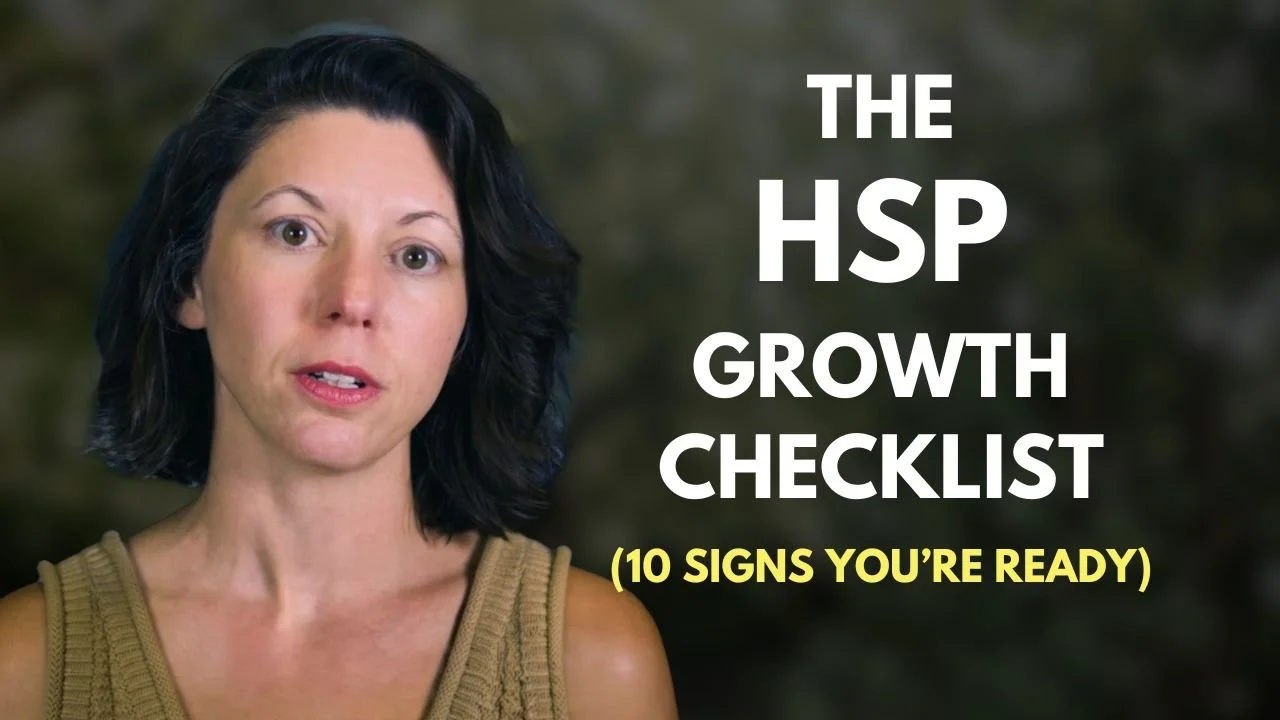
Why is it so hard to slow down and simplify, even when you already know exactly what you should do? Many highly sensitive people read every book, save every post, and understand boundaries, attachment, and the nervous system well enough to teach the concepts back. Personal growth still stalls. The gap between knowing and living is where so many highly sensitive people get stuck, and closing that gap starts with one honest question about readiness.
Readiness Matters More Than Pain for Highly Sensitive People
The people who get the most out of deep work are rarely the ones in the most pain. Readiness, not suffering, predicts personal growth for highly sensitive people. You can feel exhausted, scattered, and overwhelmed and still be completely ready.
Two Patterns of Personal Growth Show Up
Two patterns show up in personal growth work, and naming them removes the shame around getting stuck. Call the first one Person A. Person A is kind, intelligent, and good hearted, yet chaos tends to follow Person A everywhere, inside and out. The appointment gets scheduled, then rescheduled, then canceled for a reason that sounds airtight. Person A goes deep enough to feel productive while keeping the deepest layer at arm's length.
Now picture Person B. Life still feels messy. The dog still gets sick mid session. Person B books the appointment and shows up clean anyway, because personal growth has become a real priority. Person B lets a guide in for real, even when the moment feels awkward, and that willingness is what makes personal growth move.
What Your Nervous System Already Knows
Your nervous system has not gotten the memo your mind already wrote. You know slowing down is healthier and calmer. Your body has not yet learned to believe it.
What Personal Growth Actually Asks of You
Readiness for personal growth has nothing to do with meditating daily or running a perfect morning routine. It is a set of willingnesses you can practice on purpose. A few signs point to it clearly.
You stay willing to feel uncomfortable in service of personal growth, rather than bracing for danger every time discomfort shows up.
You tolerate respectful disagreement without treating it as proof that a relationship is over.
You stop collecting information for its own sake, because one more book has not closed the gap between knowing and doing.
You look at your part from ownership instead of blame, because ownership is where your power actually lives.
You hear something you dislike without instantly defending, or you at least catch the urge to defend and choose something different.
You accept that insight alone is not enough, and you move into practice and emotional strength training instead of more analysis.
You show up in your sessions and in your life, because real change asks for repetition, consistency, and time.
You want a guide, not a guru who makes the decisions so you never have to own the outcome.
You stay willing to have hard conversations instead of ghosting and quietly building a story of resentment.
You care more about becoming grounded than about appearing healed.
Ownership sits at the center of all of it. Blame hands your power to someone else and keeps the old pattern locked in place. Ownership gives that power back to you. For highly sensitive people raised in dysfunction, conflict can trigger a fear of shame spiraling, so looking at your part can feel dangerous rather than freeing. Practice teaches your nervous system the difference between discomfort and real danger.
Something deeper happens the moment you speak up about what needs addressing. The inner child witnesses you doing it. The inner child starts to learn that the adult can be trusted now, today. That witnessed moment builds inner trust, and inner trust is what so many highly sensitive people say they want most. You reach it through repetition and emotional strength training, not through one more insight.
Some people circle the same questions for years. Scheduling and rescheduling. Reading another book. Understanding every concept while living almost none of it. Pilots in training call that move a touch and go, touching down and lifting off without ever parking. Personal growth asks you to land the plane.
Information Is Not Personal Growth
Information is not the same as real change. You can know exactly why you overthink and still wake up overthinking every single day. The headaches, the eye strain, and the over busy mind are signs you have been gathering instead of practicing. Knowing and practicing are not the same thing.
Why Healing Reaches the Inner Child in Relationship
Much of your wounding happened in relationship, often with people who were inadequate or outright toxic. Much of your healing happens in relationship too. The inner child cannot mend in full isolation, because the inner child needs to feel a safe, steady energy in order to learn what safe even feels like.
This is where withdrawal gets tricky for highly sensitive people. Pulling back to recharge your senses is healthy. Pulling back to dodge all discomfort shrinks your world until it isolates you, which is one reason withdrawal sits on the depression criteria. At some point your personal growth has to come back into contact with other human beings.
Emotional Strength Training Builds Real Capacity
The goal is not a life so curated and controlled that nothing ever disturbs your peace. The goal is capacity. Emotional strength training widens what your nervous system can hold without losing center, so you return to grounded faster and start using discomfort as a teacher instead of a threat.
Personal Growth Is Becoming, Not Appearing
The people who grow are not chasing the look of being healed. Becoming grounded, courageous, and emotionally free matters far more than sounding evolved. Choose becoming.
Are You Ready for This Personal Growth?
The better question is not whether you need help, because most of us need help often and in many ways. The sharper question is whether you are ready to participate in your own personal growth. Readiness matters more than suffering for highly sensitive people, and emotional strength training is how that readiness becomes real. If you have been circling long enough, maybe it is finally time to land the plane.
Episode Tags
- ADD 1
- Abuse 17
- Alcohol 3
- Anger 11
- Archetypes 1
- Bullying 6
- Childhood 38
- Codependency 11
- Covid 4
- Crystal Catalina 4
- Depression 15
- Detachment 2
- Disassociation 4
- Discomfort 1
- Emotions 75
- Existentialism 2
- Faith 1
- Family 28
- Fatigue 4
- Focus 3
- Gratitude 12
- Grief 14
- Guilt 2
- Healers 7
- Healing 52
- High Sensation 4
- Hope 1
- Hypervigilance 7
- Introverts 6
- Lonliness 10
- Love 3
- Manifesting 5
- Manipulation 20
- Masculinity 1
- Men 1
- Mindfulness 39
- Money 10
- Music 3
- Nutrition 2
- Overthinking 8
- PTSD 13
- Parenting 12
- People Pleasing 10
- Perfectionism 8
- Pets 4
- Relationships 23
- Resiliency 14
- Sadness 1
- Self Esteem 19
- Self Love 11






Episode Tags
- ADD 1
- Abuse 17
- Alcohol 3
- Anger 11
- Archetypes 1
- Bullying 6
- Childhood 38
- Codependency 11
- Covid 4
- Crystal Catalina 4
- Depression 15
- Detachment 2
- Disassociation 4
- Discomfort 1
- Emotions 75
- Existentialism 2
- Faith 1
- Family 28
- Fatigue 4
- Focus 3
- Gratitude 12
- Grief 14
- Guilt 2
- Healers 7
- Healing 52
- High Sensation 4
- Hope 1
- Hypervigilance 7
- Introverts 6
- Lonliness 10
- Love 3
- Manifesting 5
- Manipulation 20
- Masculinity 1
- Men 1
- Mindfulness 39
- Money 10
- Music 3
- Nutrition 2
- Overthinking 8
- PTSD 13
- Parenting 12
- People Pleasing 10
- Perfectionism 8
- Pets 4
- Relationships 23
- Resiliency 14
- Sadness 1
- Self Esteem 19
- Self Love 11
Recent Episodes:


Upcoming Events


For the Highly Sensitive Person who wants meditation without distraction. No intros, no explanations, no outros. Just you, Nikki, and meditation. This pack includes 6 separate tracks and over and hour of audio meditations in HD quality. Using mindfulness, we focus the mind and train your attention and awareness, to achieve a mentally clear and emotionally calm and stable state. Meditation may help reduce stress, anxiety, depression, and pain, and enhance peace, perception, self-concept, well-being, and improve our overall mental-health.
*All files are 320k/MP3 format.
Coping Strategy for Stress and Flow (11:52)
Overcoming Bullying Meditation & Mantra (13:10)
Forest Meditation - An immersive nature experience (22:13)
Cultivating Safe Space Within (19:21)
The Space Between Meditation (10:16)
Binaural Beats Brain Wave Trance Experience (14:02)
*Bonus - Binaural Beats Brain Wave Trance Experience - Instrumental Version (14:02)