
Let Go of Toxic Relationship Patterns
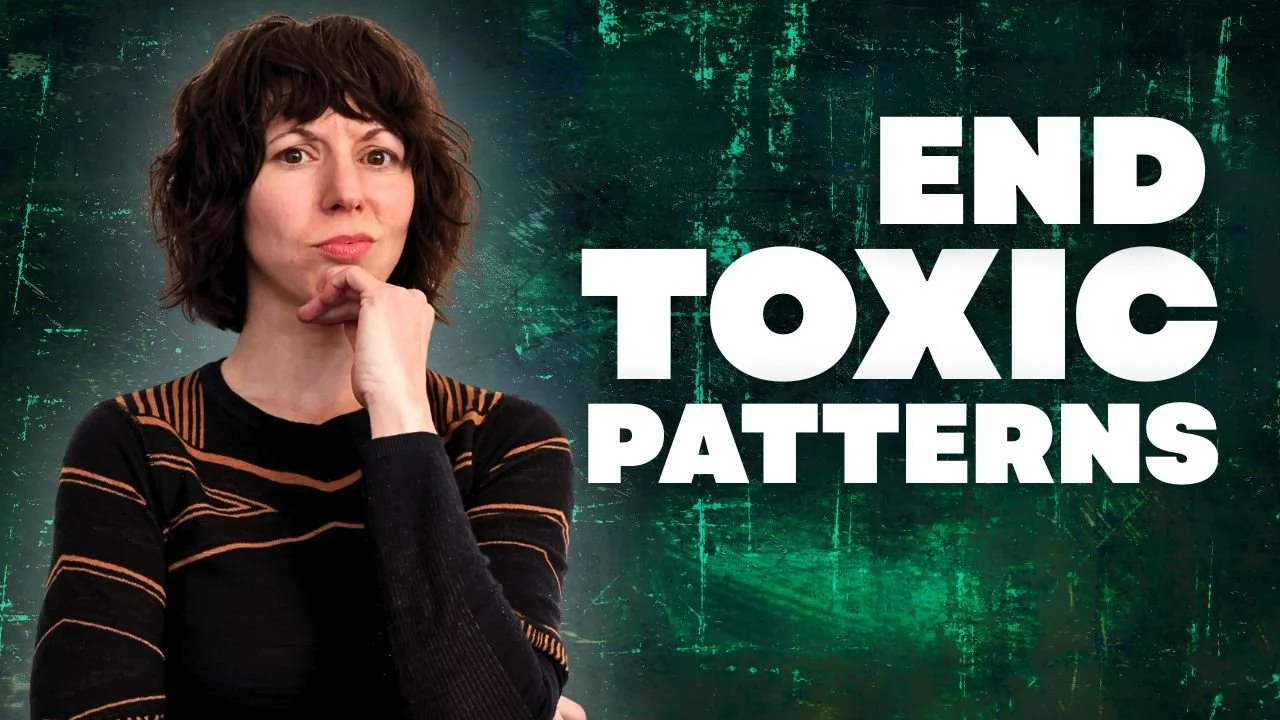
Why do you ignore your gut when it screams that someone is bad news?
Your intuition speaks first. Your doubt speaks second. Highly sensitive people often talk themselves out of what their gut clearly communicates about toxic relationships. The pattern repeats endlessly: an instinct flashes a warning, and the mind immediately rushes in to explain it away.
Think back to test-taking advice from school. Teachers said not to change your first answer because it was usually correct. What does this reveal about intuition? Was it knowledge that selected the right answer, or was it intuitive insight? For highly sensitive people, that first gut reaction often carries more truth than hours of subsequent analysis.
When you have a gut intuition about toxic relationship patterns and then invest energy ignoring it or talking yourself out of it, you create internal conflict. What if your first intuitive insight is accurate more often than not? The question becomes: why override it?
Toxic Relationship Patterns: The Emotional Calculus Trap
Highly sensitive people exhaust themselves through emotional calculus. You predict what someone else thinks. You map out conversations forty steps ahead. You analyze every possible outcome before opening your mouth.
This mental gymnastics wears you down more than the actual toxic relationships themselves. People pleasers are chronic overfunctioners in their thinking patterns. You might not lift a finger to physically do anything, but your mind runs marathon after marathon trying to anticipate needs, reactions, and judgments.
The reality? You never gather real information this way. Actual information gathering looks like asking someone directly: "What do you think about this?" Everything else is your story maker taking shame and anxiety and spinning endless narratives. These narratives keep you paralyzed, never risking real communication with the person occupying your thoughts.
This overthinking serves as a buffer from genuine risk. It keeps you stuck in confusion and prevents forward movement in toxic relationships.
The Perfectionism Factor in Toxic Relationships
Perfectionism sneaks into toxic relationship patterns in ways most highly sensitive people miss. When you knock over a glass and an internal voice snaps "what an idiot," perfectionism is at work. That voice expects you never to knock over a glass. It demands perfection or delivers shame.
The sneaky nature of perfectionism keeps highly sensitive people overthinking. A good enough answer sits within easy reach, but perfectionism demands more. It demands the perfect response, the perfect decision, the perfect way to handle toxic relationships.
Maximizers walk a fine line between making experiences wonderful and shooting for impossible perfection. When you aim for perfect and miss, disappointment follows. When you aim for maximizing what's possible, satisfaction becomes achievable.
Perfectionism in toxic relationships manifests as the belief that if you just say the right thing, present the perfect argument, or behave flawlessly, the toxic person will finally understand. This belief keeps you trapped.
People Pleasing and Energy Vampires
Energy vampires thrive on people pleasers. You prioritize pleasing them while your own needs sit neglected. Toxic relationship patterns persist because the focus stays external rather than internal.
The shift requires conscious intention. Prioritize pleasing yourself first. Then, if it feels right and you genuinely want to, consider pleasing others. This isn't selfishness. This is self-preservation.
People pleasers in toxic relationships often learned early that their needs mattered less than others' comfort. Your accomplishments threatened siblings. Your light dimmed to prevent casting shadows on others. Your excitement got muted to protect fragile egos around you.
These patterns taught you that taking up space meant being obnoxious, showy, or somehow wrong. Toxic relationship patterns formed from this messaging. You learned to manage everyone's feelings except your own.
Breaking free from people pleasing means recognizing that you are not responsible for the emotional regulation of adults around you. Energy vampires will always seek someone to drain. Your job is not to volunteer.
The Narcissist Will Never Get It
Highly sensitive people in toxic relationships with narcissists share a common struggle. You want them to understand. You craft perfect explanations. You present logical arguments. You make case after case, convinced that their intelligence means they must eventually get it.
They won't.
Narcissism at its core means low empathy and low maturity. Growth and self-reflection stay off the table. It's like expecting someone to speak a language they have no interest in learning, no matter how much you care about them learning it.
Some narcissists hold degrees. Some run companies. Some appear highly intelligent in certain domains. This makes their lack of emotional intelligence more confusing for highly sensitive people in toxic relationships with them. You think: "They're smart enough to understand this. I just need to explain it better."
You don't need to explain it better. The issue isn't your communication. The issue is their fundamental inability to access empathy the way you do.
Accepting this truth about toxic relationships with narcissists becomes a freedom button. Only you can decide when you've had enough of trying to break through, of making another case, of turning into a lawyer presenting evidence for why they should care.
Radical acceptance means acknowledging that narcissism in a personality makes certain types of growth unavailable. This acceptance doesn't mean you approve of their behavior. It means you stop exhausting yourself trying to make them into someone they're not.
Projection: The Hidden Force in Toxic Relationships
Projection is universal in human psychology. A person who manipulates projects manipulation onto others. A cheater often accuses their partner of cheating. You project your qualities onto other people like a projector casts an image onto a wall.
For empaths and highly sensitive people, projection creates a specific trap in toxic relationships. You project your own empathy and conscientiousness onto others. You assume they think like you, feel like you, and process relationships like you do.
This projection is responsible for entangling many empaths with narcissists. You believe that deep down, they must care the way you care. You trust that their words will match their behavior because yours do. You expect their heart to have the capacity to meet yours because that's what hearts do in your experience.
Toxic relationship patterns persist when you project your inner world onto people who don't share it. The antidote requires patience. Let people show you over time whether their words match their behavior. Watch whether their heart actually has the capacity to meet yours.
You can't learn this quickly. Time reveals truth that immediate impressions hide.
What Goes On in the Heads of Others
Conventional wisdom says other people are too busy to judge you. Mental health advice often suggests that others stay consumed with their own lives and don't think about you much at all.
For highly sensitive people who grew up with toxic relationships and constant judgment, this advice falls flat. Why? Because it doesn't match lived experience.
Better people, more mature people, those who engage in personal growth probably hold mostly love and light in their thoughts about you. They might question or wonder about your choices sometimes, but they don't judge harshly. When they do judge, they recognize it as their own projection and release it.
Toxic people, less mature people, those with less kindness judge constantly. They judge how you look, speak, walk, dress, breathe, and chew. They judge your hair, your skin, the way your eyebrows grow. Growing up with these people makes their judgment feel inescapable.
Radical acceptance of judgment becomes the path to freedom from toxic relationship patterns. Accept that manipulative people think manipulative things about you. Accept that bitter people spread their misery. Accept that hurt people hurt other people.
You don't have to control for any of this. People will think whatever they think about you, then they'll think more things, then they'll move on to the next person. They'll probably forget about you fairly quickly.
What relief exists in that truth. You don't have to manage anyone's thoughts. You don't have to convince anyone of your worth. You don't have to craft perfect responses to judgments that exist only in your imagination of what others might be thinking.
Emotional Regulation: Shifting Gears Intentionally
Feelings can hijack your mind and body. They can trap you in loops that serve no purpose. Emotional regulation doesn't mean suppressing feelings. It means shifting intentionally, like shifting a vehicle into the next gear.
Toxic relationship patterns often include overdoing emotional processing. You can coddle feelings to your own detriment. Big differences exist between processing something and over-focusing, obsessing, or growing drama from it.
These distinctions feel nuanced and difficult to discuss because people get defensive. If someone is being dramatic, most won't pause to consider whether they're overdoing it. They'll just become more dramatic.
Highly sensitive people feel intensely. When you're in positive feelings, the experience is light, buoyant, and joyful. When you're in darker feelings, you're completely submerged. It feels like a five-ton boulder landed on top of you.
This is when believing the ideas coming from heavy feelings becomes harmful. Thoughts like "I can't handle this" spiral into desperation. More useful thoughts sound like: "I'm tired. I've processed more grief than feels fair. I need a break from these thoughts."
These alternatives validate truth without digging a depressive hole. They acknowledge exhaustion without creating terror for your inner child to hear your adult self spinning in despair.
The question "What is the point of living?" is not useful except perhaps in cases of terminal illness. The point of living is to live, to squeeze joy from life, to explore this precious existence.
When falling into a hole, when shame asks what the point is, reach for better tools than just feeling everything while getting buried. The strategy cannot be throwing heavier and heavier thoughts on top of yourself when you already feel down and buried.
One thought that helps: "This is just a moment in time and it will pass." Simple. Repetitive. True. Every moment does pass. Every dark moment leads eventually to lighter ones.
Letting Go of What You Can't Control
Fighting to hold onto what you can't control guarantees exhaustion and a feeling of insanity. Letting go needs to be swift and easy when letting go is right.
Pick up an object. Hold it. Decide to let it go. Drop it. That's how you let go. You decide and do it. Toxic relationship patterns often include fighting against this simplicity.
You can't control other people's thoughts, behaviors, or choices. You can't control whether the narcissist finally gets it. You can't control whether toxic family members approve of your boundaries. You can't control whether your authentic self makes others uncomfortable.
What you can control: your responses, your boundaries, your choices, your focus, your healing, your growth.
Grief sometimes convinces you that you can't handle the pain. This deserves examination. Have you not handled everything life has handed you so far? Have you not survived every difficult moment that brought you to this one?
The truth for most highly sensitive people: you handle whatever life hands you. You always have. You always will. With each passing year, you handle things with more grace and ease.
Toxic relationship patterns dissolve when you stop fighting reality and start accepting what is while choosing what you will and won't tolerate moving forward.
Playing Small: The Shadow You Were Taught to Cast
Playing small gets learned in childhood through specific messaging. Perhaps your good grades made siblings feel bad, so you learned to hide your accomplishments. Perhaps your excitement threatened fragile egos around you, so you muted your joy.
Toxic relationship patterns often include this learned behavior of dimming your light. You were taught that your success casts a shadow, and managing the feelings of anyone in that shadow became your responsibility.
All people pleasers learn at some point that they better dim their light, step back, not take center stage. They learn to manage everyone else's feelings instead of celebrating their own wins.
If you've played small, examine the messaging that taught you this pattern. Reframe it. You are your own authority figure now. As an adult, only you can decide to step up for yourself.
Both choices carry consequences. Playing small keeps you safe from judgment but costs you your authentic life. Stepping into your full power risks disapproval but gifts you genuine existence.
The choice stays yours. Toxic relationship patterns include waiting for permission to be yourself. That permission only comes from you.
Episode Tags
- ADD 1
- Abuse 17
- Alcohol 3
- Anger 11
- Archetypes 1
- Bullying 6
- Childhood 38
- Codependency 11
- Covid 4
- Crystal Catalina 4
- Depression 15
- Detachment 2
- Disassociation 4
- Discomfort 1
- Emotions 75
- Existentialism 2
- Faith 1
- Family 28
- Fatigue 4
- Focus 3
- Gratitude 12
- Grief 14
- Guilt 2
- Healers 7
- Healing 52
- High Sensation 4
- Hope 1
- Hypervigilance 7
- Introverts 6
- Lonliness 10
- Love 3
- Manifesting 5
- Manipulation 20
- Masculinity 1
- Men 1
- Mindfulness 39
- Money 10
- Music 3
- Nutrition 2
- Overthinking 8
- PTSD 13
- Parenting 12
- People Pleasing 10
- Perfectionism 8
- Pets 4
- Relationships 23
- Resiliency 14
- Sadness 1
- Self Esteem 19
- Self Love 11









Episode Tags
- ADD 1
- Abuse 17
- Alcohol 3
- Anger 11
- Archetypes 1
- Bullying 6
- Childhood 38
- Codependency 11
- Covid 4
- Crystal Catalina 4
- Depression 15
- Detachment 2
- Disassociation 4
- Discomfort 1
- Emotions 75
- Existentialism 2
- Faith 1
- Family 28
- Fatigue 4
- Focus 3
- Gratitude 12
- Grief 14
- Guilt 2
- Healers 7
- Healing 52
- High Sensation 4
- Hope 1
- Hypervigilance 7
- Introverts 6
- Lonliness 10
- Love 3
- Manifesting 5
- Manipulation 20
- Masculinity 1
- Men 1
- Mindfulness 39
- Money 10
- Music 3
- Nutrition 2
- Overthinking 8
- PTSD 13
- Parenting 12
- People Pleasing 10
- Perfectionism 8
- Pets 4
- Relationships 23
- Resiliency 14
- Sadness 1
- Self Esteem 19
- Self Love 11
Recent Episodes:


Upcoming Events


For the Highly Sensitive Person who wants meditation without distraction. No intros, no explanations, no outros. Just you, Nikki, and meditation. This pack includes 6 separate tracks and over and hour of audio meditations in HD quality. Using mindfulness, we focus the mind and train your attention and awareness, to achieve a mentally clear and emotionally calm and stable state. Meditation may help reduce stress, anxiety, depression, and pain, and enhance peace, perception, self-concept, well-being, and improve our overall mental-health.
*All files are 320k/MP3 format.
Coping Strategy for Stress and Flow (11:52)
Overcoming Bullying Meditation & Mantra (13:10)
Forest Meditation - An immersive nature experience (22:13)
Cultivating Safe Space Within (19:21)
The Space Between Meditation (10:16)
Binaural Beats Brain Wave Trance Experience (14:02)
*Bonus - Binaural Beats Brain Wave Trance Experience - Instrumental Version (14:02)