
The HSP Brain and Holiday Loneliness
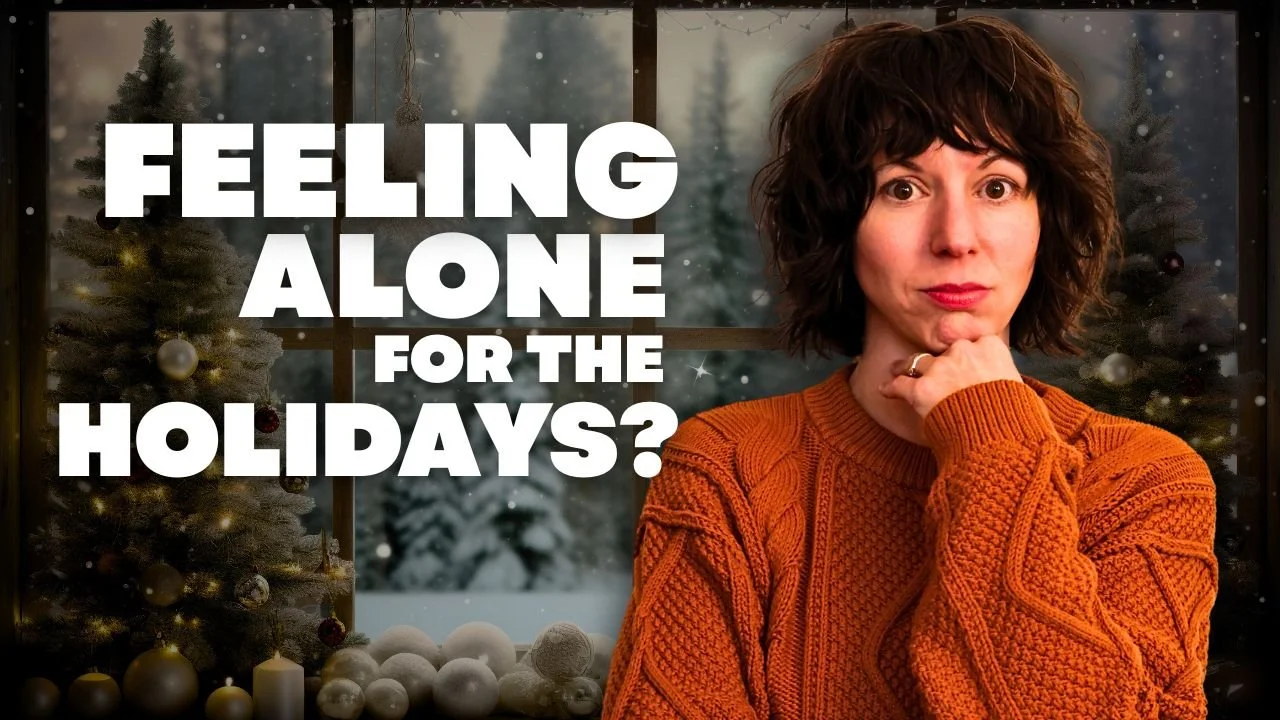
Are you even really lonely or are you just alone?
This question challenges everything highly sensitive people believe about their holiday experiences. The holidays highlight loneliness. They just do. Living through a loneliness epidemic across the world means billions of people feel isolated right now. Technology promised increased connection but delivered emotional and spiritual disconnection instead.
Collective imagery bombards everyone with messages that holidays mean togetherness. People. Family. Laughter. Hot cocoa. Fireplaces.
When families and chosen families provide reasonably safe and kind support systems, this works beautifully. Tradition and celebration strengthen bonds. But for highly sensitive people and trauma survivors, this expectation of togetherness becomes a weapon. Shame picks up that expectation like a dagger and plunges it into highly sensitive hearts.
Understanding Loneliness for Highly Sensitive People
The loneliness epidemic affects highly sensitive people differently than others. HSPs feel everything fully. When loneliness hits, there's a fullness to that experience. Nothing dysfunctional or maladaptive exists in feeling lonely completely.
The danger starts when highly sensitive people don't just sit with their feelings. The feeling leaves the body, runs to the head, and creates stories about worthiness and being. Loneliness transforms into a narrative from shame that cuts deep.
"You must be the only person alone on Christmas."
"Other people can have family dinners. Why can't you?"
These stories dig holes deeper and deeper. Shame isolates. The more isolated you become, the more shame can chip away at your worth. Shame feeds itself. It hunkers down. It gains its own life force inside your psyche.
The Dharma and Karma of Highly Sensitive People
Every person lives out different paths. A bee's dharma is making honey. A bird's dharma involves flying, building nests, laying eggs. A tree grows, provides shade, holds birds in its branches.
What's your dharma as a highly sensitive person?
One purpose might be showing people how pain doesn't have to destroy them. Resiliency in the face of loneliness becomes a societal act of rebellion. Karma involves the choices made toward that calling. What choices can highly sensitive people make while feeling lonely?
Considering dharma and karma creates perspective. It pulls heads and hearts out of intense feelings in any given moment. Life is a marathon. Bigger things are happening than what's occurring right now. This perspective helps hold loneliness when necessary.
Technology and Pseudo-Connection During the Holidays
Technology offers pseudo-connection. Constant access to other people's lives through devices creates voyeuristic relationships. This fills the space where real connections should exist. Feet touching grass. Neighbors in actual physical communities.
For highly sensitive people feeling lonely and yearning for their people, billions of others are also searching. Between 15 and 20 percent of people are highly sensitive. That percentage of billions still represents millions of individuals.
Highly sensitive people often become hyper-independent. Subconscious patterns decided long ago that keeping everything on their shoulders was the safest approach. This makes connecting and seeing that connection isn't entirely on their shoulders difficult.
Your feelings can lie. If you feel fully lonely as a highly sensitive person, the feeling expands to fill everything. But feeling lonely doesn't mean being the only person experiencing loneliness. Other highly sensitive people exist in your county, your state, your country.
Loneliness Versus Being Alone: A Critical Distinction
Society doesn't understand a loner spirit. No positive template exists for people who need solitude. When mainstream media uses the word "loner," the undercurrent suggests something sinister. Lone shooter. Lone gunman. Psycho. Antisocial person on the fringes.
Almost no positivity surrounds being more of a loner. What if highly sensitive people are absorbing messages about needing to be surrounded by people constantly? What if that's not true for everyone?
Are you really lonely or just operating under society's norms? Many highly sensitive people don't fit most societal norms anyway. Why would this be different?
When you've done the work to shed what no longer serves you, when you actually like and love yourself, being alone becomes different. Being singular. Having one's own company. Why wouldn't this be okay except for societal messages?
How Shame Uses Loneliness Against Highly Sensitive People
What meaning are you giving to having fewer people in your sphere than more? What if your story-maker is being inspired by shame? What happens when you keep giving loneliness a meaning that hurts you, makes you feel less than, makes you feel like you don't measure up?
What happens when you stop giving loneliness that societal meaning and give it a different meaning instead?
"I'm enough for myself when I'm alone."
"I can work on any hobby or interest without negotiating with someone else."
"Other days, other celebrations, other years, I can be around people. Right now I'm not. That's okay."
Old messages from childhood play on repeat for highly sensitive people. Messages about being difficult. Messages about dying alone. Messages about not measuring up. These aren't truths. They're old recordings from people who couldn't handle sensitivity.
Knowing where these messages originate gives power. Seeing them in the light of day instead of letting them sneak up in shadows makes them combatable. Power to choose becomes powerful. Either you're powerfully digging the hole or powerfully filling it in and standing on firmer ground.
Recharging as a Highly Sensitive Person
Recharging isn't a flaw for highly sensitive people. It's a feature. Accepting this need makes it easier to manage life. Sometimes choosing to be alone with thoughts and feelings is necessary. Privacy. Quiet. Space to process emotions.
The commitment highly sensitive people must make is rejecting shame and recommitting to permission. Taking the time and space needed when it's needed. Seeing this as positive self-care. Respect. Love.
You can love people and need breaks from people. These truths will always be a dance. Dancing with lightness and ease versus frustration and fight comes down to choice.
Where Highly Sensitive People Belong
Trying to belong consumes energy for highly sensitive people. Looking back at four, six, eight, ten years old reveals a pattern of trying to fit in. Not feeling like you belonged in many places. Shame takes the form of lack and uses experience and feeling to prove worth is low.
It's always easy to notice everywhere you don't fit. Family of origin. Extended family. In-laws. Neighborhoods. Professional circles. Seeing and feeling everywhere you don't fit becomes automatic.
The shift requires force. Like shifting a five-speed car. You can't think the car into the next gear. You use your hand and foot and make that car shift to the next appropriate gear. You don't hope the car into gear.
Shift to seeing the places you do fit and have fit.
Where do you belong? Where do you fit? The deepest belonging highly sensitive people can have is with themselves. Your inner child belongs with you always. That's the most profound belonging possible.
Taking Action Against Loneliness
Getting out of feelings and leaning into action provides relief. Billions of people exist out there. Only a couple of actions separate you from human interaction in any given moment. Take a breath. Sit with that thought.
99.9 percent of the time, you're just a couple of actions away from human interaction if you're open to it and don't avoid it.
Choose shame-free solitude or get out and connect with other humans.
Go for a walk and wave at anyone you see
Volunteer
Give out winter supplies to people experiencing homelessness
Go to movies or theater to be with an audience
Connect energetically with others who understand
Past Hurt Doesn't Predict Future Connection
You don't need to change who you are if you're lonely. You do need to practice self-love and discernment. Self-respecting self-talk that stops letting shame grab the microphone.
Past hurt, betrayal, and pain don't predict what's available tomorrow. Every wrong connection and hurt feeling provided exercises you didn't know you were doing. These experiences culminated in relational wisdom and strength. Every time you fell down relationally and got back up, you got closer to the right connections.
If you're sad or lonely or struggling this holiday season, breathe and be. Accept yourself. Treat yourself with highest regard, respect, and compassion.
Highly sensitive people face unique challenges with loneliness during the holidays. The same sensitivity that makes connection difficult also makes it more meaningful when found. Your highly sensitive nature isn't the problem. The problem is a world that doesn't value sensitivity and solitude appropriately.
Human connection is never a one-way street. While you're looking for your people, your people are looking for you. The loneliness epidemic means millions of highly sensitive people are navigating these same feelings right now. Shame wants you to believe you're alone in this. The reality tells a different story.
Choose to believe other people are yearning for someone deep, conscientious, funny, smart, and interesting. Someone exactly like you. They're out there looking. Stay open. Stay ready. Stay available.
Episode Tags
- ADD 1
- Abuse 17
- Alcohol 3
- Anger 11
- Archetypes 1
- Bullying 6
- Childhood 38
- Codependency 11
- Covid 4
- Crystal Catalina 4
- Depression 15
- Detachment 2
- Disassociation 4
- Discomfort 1
- Emotions 75
- Existentialism 2
- Faith 1
- Family 28
- Fatigue 4
- Focus 3
- Gratitude 12
- Grief 14
- Guilt 2
- Healers 7
- Healing 52
- High Sensation 4
- Hope 1
- Hypervigilance 7
- Introverts 6
- Lonliness 10
- Love 3
- Manifesting 5
- Manipulation 20
- Masculinity 1
- Men 1
- Mindfulness 39
- Money 10
- Music 3
- Nutrition 2
- Overthinking 8
- PTSD 13
- Parenting 12
- People Pleasing 10
- Perfectionism 8
- Pets 4
- Relationships 23
- Resiliency 14
- Sadness 1
- Self Esteem 19
- Self Love 11








Episode Tags
- ADD 1
- Abuse 17
- Alcohol 3
- Anger 11
- Archetypes 1
- Bullying 6
- Childhood 38
- Codependency 11
- Covid 4
- Crystal Catalina 4
- Depression 15
- Detachment 2
- Disassociation 4
- Discomfort 1
- Emotions 75
- Existentialism 2
- Faith 1
- Family 28
- Fatigue 4
- Focus 3
- Gratitude 12
- Grief 14
- Guilt 2
- Healers 7
- Healing 52
- High Sensation 4
- Hope 1
- Hypervigilance 7
- Introverts 6
- Lonliness 10
- Love 3
- Manifesting 5
- Manipulation 20
- Masculinity 1
- Men 1
- Mindfulness 39
- Money 10
- Music 3
- Nutrition 2
- Overthinking 8
- PTSD 13
- Parenting 12
- People Pleasing 10
- Perfectionism 8
- Pets 4
- Relationships 23
- Resiliency 14
- Sadness 1
- Self Esteem 19
- Self Love 11
Recent Episodes:

Upcoming Events


For the Highly Sensitive Person who wants meditation without distraction. No intros, no explanations, no outros. Just you, Nikki, and meditation. This pack includes 6 separate tracks and over and hour of audio meditations in HD quality. Using mindfulness, we focus the mind and train your attention and awareness, to achieve a mentally clear and emotionally calm and stable state. Meditation may help reduce stress, anxiety, depression, and pain, and enhance peace, perception, self-concept, well-being, and improve our overall mental-health.
*All files are 320k/MP3 format.
Coping Strategy for Stress and Flow (11:52)
Overcoming Bullying Meditation & Mantra (13:10)
Forest Meditation - An immersive nature experience (22:13)
Cultivating Safe Space Within (19:21)
The Space Between Meditation (10:16)
Binaural Beats Brain Wave Trance Experience (14:02)
*Bonus - Binaural Beats Brain Wave Trance Experience - Instrumental Version (14:02)