
The Sneaky Bastard of Perfectionism: 9 Phrases You Think Are Helping (They're Not) – Part 2
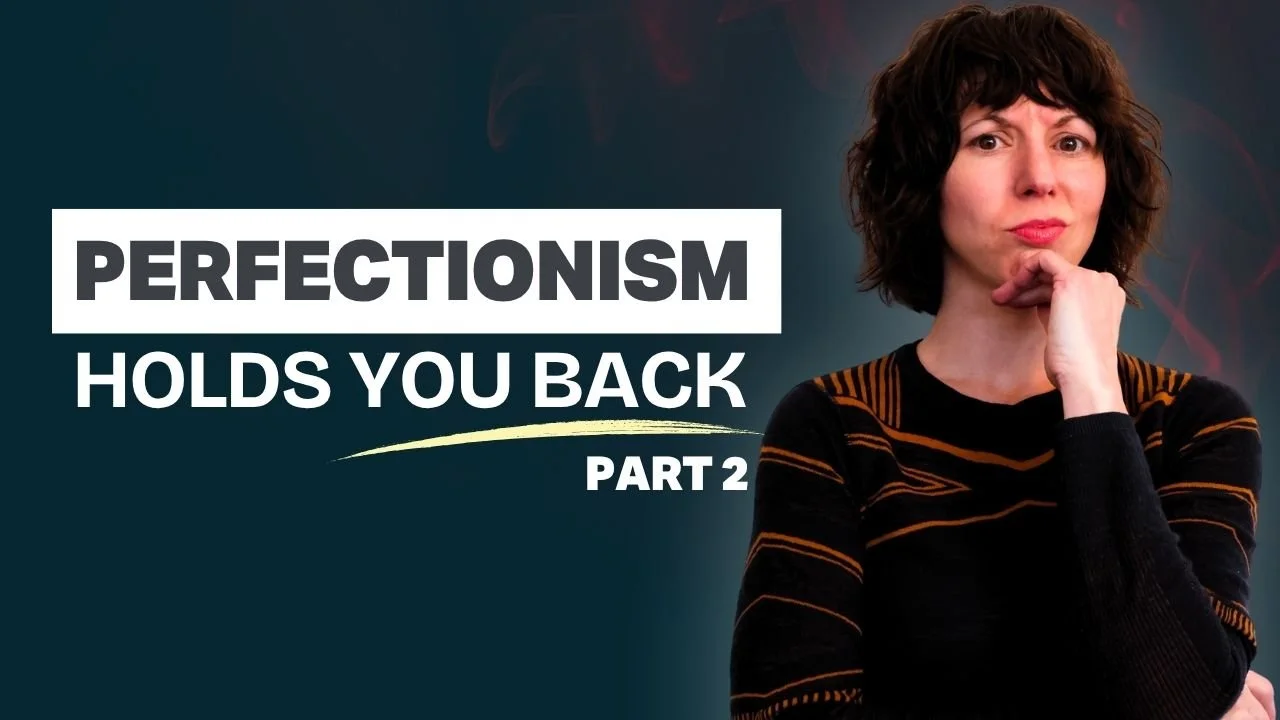
How does the phrase "I'm working on myself" feel in your mind and body?
You probably think it sounds healthy. Growth-oriented. Exactly what a conscious person should say. But what if your most virtuous-sounding self-talk is actually perfectionism doing its dirty work?
Part 1 covered the first four phrases that perfectionism hijacks. Part 2 tackles three more common phrases that highly sensitive people repeat daily without realizing the damage underneath. These phrases sound like wisdom on the surface. That's precisely why the inner critic loves them.
Phrase Five: "I'm Working on Myself"
Nothing wrong with this phrase, right? HSPs especially resonate with constant self-improvement. Strong work ethics and visionary qualities make this seem like the path forward.
Translation from your critical voice: "Because I know how broken I am. I am a constant project that is never complete. I will not let myself be in thriving mode until I achieve what I expect out of myself. Which means I'm going to kick my own peace can down the road because I don't think I deserve it yet."
Does that undercurrent weigh heavy on you? Does it push you toward shame instead of peace?
You are seekers. In some ways, you will always be working on yourself. But perfectionism turns natural growth into performance-based self-worth. This becomes a trap where you can only feel okay when summiting mountains. The second you sit down to rest, the second you stop being a human doing and lean into your human beingness, you have no idea how to feel like a worthy person.
Performance-Based Self-Worth: The Bastard Cousin
Performance-based self-worth is another bastard cousin of perfectionism. Any time you achieve something, you allow yourself to feel pretty cool. But as soon as you reach the summit and turn around to come back down the mountain—the easy part—worthiness evaporates.
Imagine being duct-taped to a chair. Every time you try to get up, someone intervenes. You can't wash dishes to feel worthy. You can't walk the dog. You can't help fold laundry. You can't do anything you think is useful right now. You must sit there until you can say you are worthy of a good life, of goodness, of savoring peace in this present moment just because you exist.
You have a heart. You have a mind. You have a spirit. You have uniqueness that makes you who you are and no one else. You count and you matter.
Stop making yourself a circus monkey that must perform to feel okay. Stop seeking approval outwardly and start giving yourself approval inwardly for who you are and how far you've come today. Stop kicking approval down the road into a future you can't actually meet yourself in.
You can only meet yourself in this present moment.
The Future Peace Trap
Remember asking questions as a kid and hearing "I'll tell you when you're older"? That phrase has an undercurrent different from its face value. What adults really mean: this question freaks me out and I don't know how to answer it, so I'm kicking the can down the road.
You do this same thing to yourself without realizing. You tell yourself you can't have peace today. You can have peace when you're older. When you've achieved more. When you've fixed yourself. When you've become better.
Why set up this chasing dynamic where the carrot stays just out of reach?
Both things can be true simultaneously. You can always be working on yourself AND practice being satisfied with where you are right now. Who you are today. With all your imperfections. All your messiness. All the things still not yet known.
You have a whole rest of a life to figure those things out. You're allowed to keep learning with lightness and grace. Even some fun and humor. You're allowed to thrive even when you know there's more work to do.
What would happen if you gave yourself this permission?
Phrase Six: "I Don't Want to Make Excuses"
HSPs say this constantly. Strong work ethics and high standards make this phrase sound like wisdom. You're supposed to not make too many excuses, right? You know that wisdom.
But look at what your psychology actually does with this phrase.
Translation: My humanity is suspicious. I don't trust me. I'm not sure anybody else should either. Any reason that I didn't do something is bad. It's a bad excuse. There are no valid reasons I may drop a ball or need to say no or change my mind.
Your moral compass is good. Your character matters to you. You don't want to live a life full of excuses or blame others or shirk responsibility or act like the victim of life and circumstance. You want to rise above. You want to be someone who says what you mean and delivers what you commit to.
This is lovely. But HSPs seem shocked that they need to allow themselves some grace here.
There's a different interpretation for someone who actually is an excuse factory. When that person says "I don't want to make excuses," it usually means: I'm going to keep making excuses but I want you to think I'm self-aware about it. The words become a shield for continued avoidance.
The highly sensitive person saying this phrase isn't making excuses at all. You're refusing to acknowledge valid reasons for very human limitations. You're treating your own humanity as suspicious.
Valid Reasons vs. Excuses
Your nervous system has limits. Your emotional capacity has boundaries. Your energy reserves are finite. These aren't excuses. These are biological facts about being human in a body.
Perfectionism wants you to override all of that. Push through. Power through. Ignore your needs. When you're suspicious of your own humanity, you never trust when you genuinely need rest. When you actually need to say no. When changing your mind is the wisest choice available.
Self-compassion means accepting that you have valid reasons sometimes. Not everything is an excuse trying to let you off the hook. Sometimes you can't. Sometimes you need to stop. Sometimes the most responsible thing you can do is acknowledge a limitation and adjust accordingly.
The phrase "I don't want to make excuses" becomes weaponized against your own well-being when perfectionism gets hold of it.
Phrase Nine: "I Want to Be Emotionally Mature About This"
Do you say this to yourself or out loud? Nothing wrong with this at first sound, right? Don't we all want to be emotionally mature? Wouldn't we hope everyone wants emotional maturity?
Translation: Not expressing emotion and having ultimate control is maturity. Maturity means poker face.
Wrong.
HSPs don't have a good poker face. When you maintain one outside of actual poker, that's suppression. A poker face suppresses your natural expression so you don't give any tells about having a good hand or not. It's strategy for winning gambling. Not authenticity. Not emotional maturity.
It's sweeping things under the rug.
You're learning to strike a balance. Not letting the pendulum swing from suppression and faking calm to being emotionally messy with outbursts all over the place. Working to express in response versus reaction.
If you cannot respond in any given moment because you're activated, because you feel a surge through your nervous system where fight or flight has been enacted, that's not a maturity issue. That's a nervous system issue.
Nervous System Deregulation vs. Emotional Immaturity
Giving into reactivity again and again—ruining hotel rooms, throwing things, having real outbursts, telling somebody off that you're trying to maintain a close connected relationship with—that may be immaturity that plays after nervous system deregulation.
HSPs need to understand this nuance deeply. If your inner child does come out, that reactive part, you can work to mature that part. Your wisest parts, your wise woman or wise man, your most mature parts can handle things instead of letting the wounded inner child handle things.
It feels impossible at times to get a handle on reactivity. If your nervous system is very reactive, it feels impossible to have reasonable control. It feels genuinely out of your control.
But you flex these muscles and flex these muscles and flex these muscles until you feel more of a sense of control. You gain more control over yourself and your nervous system when you're calm and when you're activated. It is possible even if it feels impossible to you right now.
You don't believe this by hearing it once. You grow into believing this. It's not a light switch that gets flipped because someone tells you it can be done.
The work is also worth it once you're through the bulk of it. The fact that you can keep your cool in ways your younger self thought were impossible creates the most incredible feeling. Seeing yourself evolve. Seeing yourself get a handle on something you thought was unhandleable.
This becomes a beacon guiding you to shore where your life can be steadier. Your ability to respond versus react grows. You stand on safe land in ways you never could when you were lost, floating on choppy waters.
You may get sea legs when you come out of the water, especially when you've been floating on dysfunctional waters for a very long time. It can feel strange to get on land after that. You may fall down. You may be wobbly on solid ground because it's unfamiliar.
But just like your sea legs, you will find steadier footing if you stay on steadier ground. That's less about your external circumstances no matter what they are. You can study yourself internally. You can study yourself spiritually. You can do things with your body—breathing, movement—to study your nervous system and get embodied.
You become that steadier ground for yourself.
Good Enough Maturity
None of it can be or needs to strive for perfect maturity. Don't let perfectionism make you think you can be perfectly mature, never sarcastic, always assertive in every situation.
Call this good enough maturity instead. Getting older and wiser all the time.
Good enough maturity acknowledges that you will still have reactive moments. You will still struggle. You will still have days where your nervous system gets the better of you. That's being human.
The difference is you're building capacity. You're developing awareness. You're creating space between stimulus and response more often than you used to. That's growth. That's emotional maturity in practice, not in theory.
Perfectionism wants flawless execution every single time. Self-compassion wants steady growth over time with room for mistakes, backslides, and learning curves.
The Inner Critic's Weapon System
The inner critic is overdeveloped in every highly sensitive person. This inner bully robs progress, disempowers, and devalues who you are, especially when energies are low.
Without addressing the inner critic directly, you risk digging mental health holes that become deeper and more difficult to crawl out of. You were never meant to be in a hole. You were meant to stand tall and proud at the peak of the mountain of life.
The inner critic uses these common phrases as weapons:
"I'm working on myself" becomes proof you're fundamentally broken
"I don't want to make excuses" becomes suspicion of your own humanity
"I want to be emotionally mature" becomes suppression of authentic emotion
Performance-based self-worth tells you achievement equals worthiness
Perfectionism convinces you peace must be earned, not claimed
Each phrase sounds reasonable on the surface. That's precisely why the inner critic loves them. They provide cover for perfectionism to do its dirty work without detection.
Reframing Toward Self-Compassion
You can practice new language until it becomes your own. Write it down like spelling words in elementary school. Say it aloud until it sinks into your system. Let your nervous system absorb different messages.
The goal is becoming clearer, easier, more flowing, more encouraging, more energized, more passionate, more joyful, more peaceful. All of that is thriving, not just surviving.
If your earlier life was tough, you deserve more peace. You are worthy of building that kind of peace mentally, emotionally, spiritually, physically, financially—in all the ways. Your worth as an individual does not change. Worth remains fixed no matter your financial value or comfort, whether there is one dollar or millions, even when your feelings try to say otherwise.
Moving Forward Without Perfectionism
Shining light on these common phrases helps you identify when perfectionism is screwing with you. Awareness is always the first step toward change.
The second step is practicing different language. Language that allows for humanity. Language that includes self-compassion. Language that acknowledges limits without shame. Language that separates nervous system reactivity from character defects.
You're not a constant project that needs fixing. You're a person who is learning and growing. Those two things sound similar but feel completely different in your body and mind and nervous system.
One keeps you trapped in performance-based self-worth where peace stays perpetually out of reach. The other allows you to thrive while still doing the work of growth and healing.
There are no white knights in this life. You are enough for yourself. Accepting that helps you connect to other people who are also enough for themselves. Connection happens between whole people, not between projects trying to earn their worthiness.
Your emotional maturity doesn't require a poker face or suppression. Your self-improvement doesn't require treating yourself as broken. Your growth doesn't require kicking peace down the road until some imaginary finish line.
Good enough maturity. Present moment worthiness. Self-compassion alongside continued growth.
That's the answer perfectionism doesn't want you to find. That's the path the inner critic tries to block at every turn. But highly sensitive people can learn to spot these phrases for what they really are—perfectionism in disguise—and choose different language that actually serves healing instead of harm.
Episode Tags
- ADD 1
- Abuse 17
- Alcohol 3
- Anger 11
- Archetypes 1
- Bullying 6
- Childhood 38
- Codependency 11
- Covid 4
- Crystal Catalina 4
- Depression 15
- Detachment 2
- Disassociation 4
- Discomfort 1
- Emotions 75
- Existentialism 2
- Faith 1
- Family 28
- Fatigue 4
- Focus 3
- Gratitude 12
- Grief 14
- Guilt 2
- Healers 7
- Healing 52
- High Sensation 4
- Hope 1
- Hypervigilance 7
- Introverts 6
- Lonliness 10
- Love 3
- Manifesting 5
- Manipulation 20
- Masculinity 1
- Men 1
- Mindfulness 39
- Money 10
- Music 3
- Nutrition 2
- Overthinking 8
- PTSD 13
- Parenting 12
- People Pleasing 10
- Perfectionism 8
- Pets 4
- Relationships 23
- Resiliency 14
- Sadness 1
- Self Esteem 19
- Self Love 11










Episode Tags
- ADD 1
- Abuse 17
- Alcohol 3
- Anger 11
- Archetypes 1
- Bullying 6
- Childhood 38
- Codependency 11
- Covid 4
- Crystal Catalina 4
- Depression 15
- Detachment 2
- Disassociation 4
- Discomfort 1
- Emotions 75
- Existentialism 2
- Faith 1
- Family 28
- Fatigue 4
- Focus 3
- Gratitude 12
- Grief 14
- Guilt 2
- Healers 7
- Healing 52
- High Sensation 4
- Hope 1
- Hypervigilance 7
- Introverts 6
- Lonliness 10
- Love 3
- Manifesting 5
- Manipulation 20
- Masculinity 1
- Men 1
- Mindfulness 39
- Money 10
- Music 3
- Nutrition 2
- Overthinking 8
- PTSD 13
- Parenting 12
- People Pleasing 10
- Perfectionism 8
- Pets 4
- Relationships 23
- Resiliency 14
- Sadness 1
- Self Esteem 19
- Self Love 11
Recent Episodes:


Upcoming Events


For the Highly Sensitive Person who wants meditation without distraction. No intros, no explanations, no outros. Just you, Nikki, and meditation. This pack includes 6 separate tracks and over and hour of audio meditations in HD quality. Using mindfulness, we focus the mind and train your attention and awareness, to achieve a mentally clear and emotionally calm and stable state. Meditation may help reduce stress, anxiety, depression, and pain, and enhance peace, perception, self-concept, well-being, and improve our overall mental-health.
*All files are 320k/MP3 format.
Coping Strategy for Stress and Flow (11:52)
Overcoming Bullying Meditation & Mantra (13:10)
Forest Meditation - An immersive nature experience (22:13)
Cultivating Safe Space Within (19:21)
The Space Between Meditation (10:16)
Binaural Beats Brain Wave Trance Experience (14:02)
*Bonus - Binaural Beats Brain Wave Trance Experience - Instrumental Version (14:02)